
BMW M3 GTR E46: the V8 race car, the rare road version and its victories
The BMW M3 GTR is the V8 racing version of the E46 M3. Why BMW gave it a V8, its 2001 season in America, the very rare road version, its Nürburgring 24 Hours wins and its fame in video games.
5 views 1 reading now 0 comments 8 min read
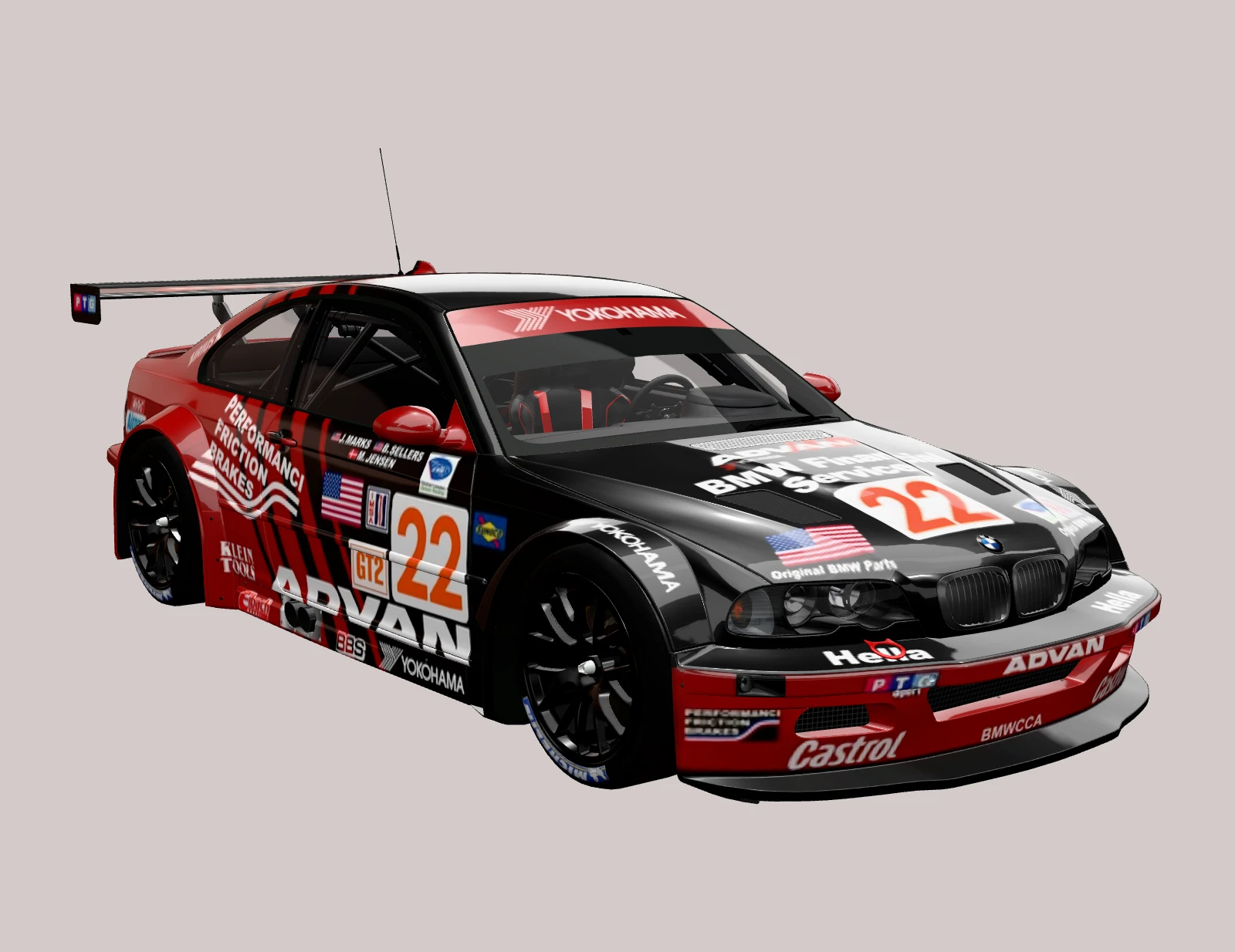 View in 3D
On this page
The BMW M3 GTR is the most extreme M3 of the E46 generation. Built for GT racing, it replaced the famous straight-six with a 4.0-litre V8, added a wide body and a large rear wing, and won in America and at the Nürburgring.
In this article we look at why BMW built the M3 GTR, its V8 engine, the 2001 racing season, the very rare road version, its 24-hour victories, its design, its fame in video games and its legacy.
What the BMW M3 GTR is
The BMW M3 GTR is a racing car based on the E46 M3 Coupé. It was developed by BMW Motorsport for GT racing and made its debut in 2001 in the American Le Mans Series, in the GT class that was later known as GT2.
From the outside it still looks like an M3, but almost everything is different. The body is much wider, with large wheel arches, a deep front splitter, side skirts and a large rear wing. Inside there is a racing cockpit with a roll cage and a single seat. Under the bonnet sits a 4.0-litre V8 engine instead of the straight-six of the road car.
The GTR was built for one purpose: to win. It became famous for its speed, its sound and the story of its road version, of which only very few were ever made.
For the history of the normal road car, read our BMW M3 E46 guide, and for its engine, our article on the BMW S54 engine.
Why BMW gave the M3 a V8
In GT racing, the rules allowed manufacturers to use a different engine if it was also offered in a road version of the car. BMW decided that a V8 would give the M3 more power and better torque for long races than the straight-six.
The result was the P60, a 4.0-litre V8 developed by BMW Motorsport. It has 32 valves, a compact design and loves high engine speeds. In racing form it produced around 450 PS, depending on the rules and the air restrictors used in each series.
The V8 also changed the character of the car. The M3 GTR has a deep, loud and very distinctive sound that fans still recognise immediately.
The P60 was a racing engine and should not be confused with the S65 V8 of the later E92 M3, which was a different design. Our article on the BMW S65 engine explains that road car engine.
Racing in America in 2001
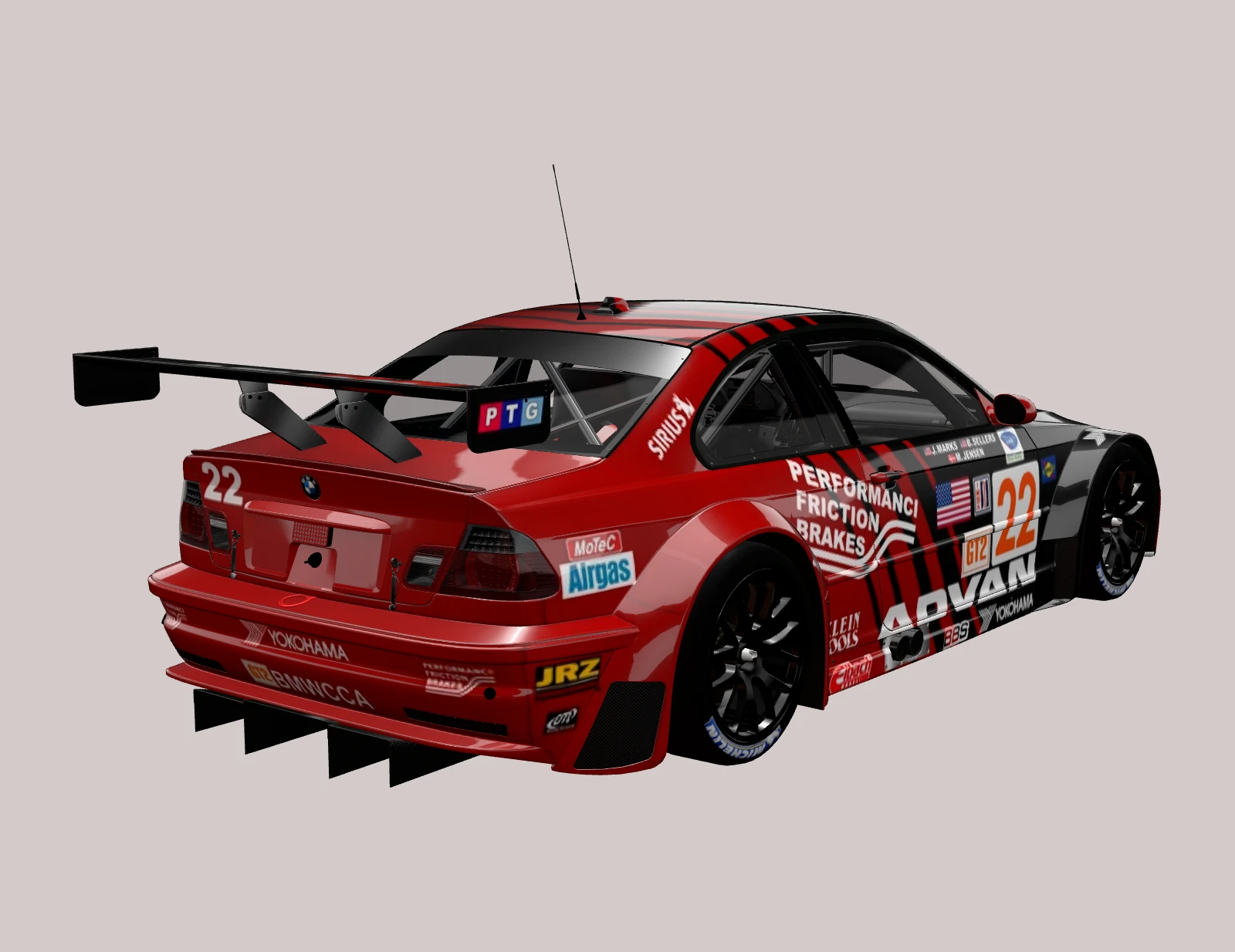
BMW entered the M3 GTR in the 2001 American Le Mans Series with the experienced Schnitzer team. Its main rivals were the Porsche 911 GT3 cars that had dominated the class before.
The GTR was fast from the start. It won many races in its class during the season, and BMW took the GT titles for drivers, teams and manufacturers. Jörg Müller won the GT drivers' title, and JJ Lehto was among the drivers who raced the car.
The success was so clear that rivals complained. They argued that the V8 road version was not really available to buy, so the car did not follow the spirit of the rules.
This first season made the M3 GTR famous around the world, even though its time in the American series turned out to be very short.
The M3 GTR road version
To meet the rules, BMW built a road version of the M3 GTR in 2001. It used a road-going version of the P60 V8 with around 350 PS, a wide body similar to the race car, a front splitter and a rear wing.
Only a very small number of road cars were built, often quoted as around ten, and only a few of them were sold to private customers. The price was very high, much more than a normal M3.
When the rules for 2002 were changed to require larger production numbers of road cars and engines, BMW decided not to build a larger series. Instead, it left the American Le Mans Series with the GTR after one season.
Because so few road cars exist, the M3 GTR road version is one of the rarest and most valuable M3s. Most fans have only ever seen one in a museum or at a special event.
Victories at the Nürburgring 24 Hours
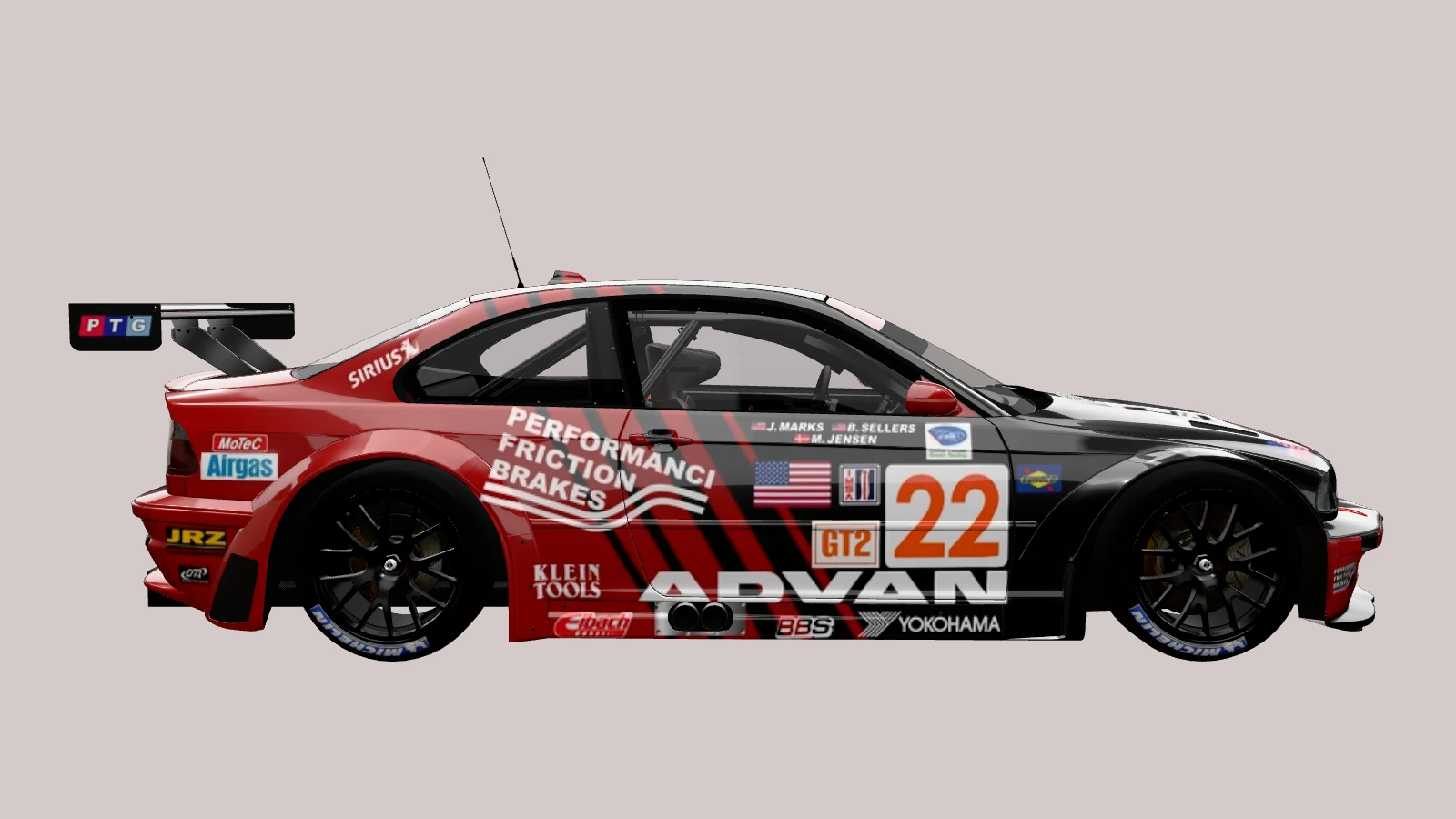
After leaving America, the M3 GTR found a new home at the Nürburgring. The 24-hour race on the Nordschleife has much more open rules for engines and cars, so the V8 GTR could compete without a large road car series.
The Schnitzer team, supported by BMW, won the Nürburgring 24 Hours overall in 2004 and again in 2005. The car was fast, reliable over 24 hours and well suited to the long, demanding track.
Privately run M3 GTRs also raced in the long-distance series at the Nürburgring for several years, and the car became a favourite of fans in the Eifel mountains.
Our article on the BMW Nürburgring Nordschleife story explains why the track is so important for BMW and its M cars.
Design and aerodynamics
The body of the M3 GTR was designed for downforce and cooling. The front bumper has large openings for the radiators and brakes and a wide splitter close to the ground. The wheel arches are much wider than on a normal M3 to make room for wide racing tyres.
At the back, a large rear wing creates downforce for the rear axle. The race car also has a flat underbody and a diffuser, and much of the body is made from lightweight materials such as carbon fibre.
The race car weighed around 1,100 kg, depending on the rules of each series. With around 450 PS, it had a very favourable power-to-weight ratio for a GT car.
On this page you can explore the M3 GTR in 3D and change the paint, wheels and lights in Configure. The wide body and big wing look very different in each colour, and many fans like the classic silver and blue design best.
A star in video games
For many people, the M3 GTR is not only a racing car but also a video game icon. A silver and blue M3 GTR was the hero car of a very popular racing game in 2005, and it is still one of the best-known BMWs among gamers today.
The car has also appeared in many racing simulators, where players can drive it on famous tracks such as the Nürburgring. This helped a new generation discover the car, even if they never saw it race in real life.
Because of this fame, many E46 M3 owners have built replicas with GTR-style body kits, wings and liveries. Some are very detailed, others only use the look.
If you are interested in wide body builds for the E46 M3, our article on the Pandem E46 M3 explains how such a build comes together.
The legacy of the M3 GTR
The M3 GTR had a short official career, but it left a big mark. It showed that BMW Motorsport could build a winning GT car, it brought two overall victories at the Nürburgring 24 Hours and it became one of the most famous M3s of all time.
Its story also shaped later BMW racing cars. The M3 GT2 based on the E92, the Z4 GT3 and today's M4 GT3 continued the tradition of BMW GT racing cars with M DNA.
For collectors, the road version is almost impossible to buy, and the race cars are valuable historic racing machines. For most fans, the best way to enjoy the GTR is to see it at historic events, in museums or in the virtual world.
If you want to own an E46 M3 for the road, our E46 M3 buying guide explains the main checks. And on this page, you can explore the M3 GTR in 3D whenever you like.
BMW M3 GTR E46 specifications
| Specification | Value |
|---|---|
| Model | BMW M3 GTR (E46) |
| Debut | 2001, American Le Mans Series (GT class) |
| Team | Schnitzer, supported by BMW Motorsport |
| Engine | P60B40 4.0-litre V8, 32 valves |
| Power (race) | About 450 PS, depending on rules and restrictors |
| Power (road version) | About 350 PS |
| Gearbox | Sequential racing gearbox (race car) |
| Drive | Rear-wheel drive |
| Weight (race) | About 1,100 kg, depending on the series |
| Road versions | Very few built, often quoted as around ten |
| Main results | ALMS GT titles 2001; Nürburgring 24 Hours wins 2004 and 2005 |
Frequently asked questions
What engine does the BMW M3 GTR have?
The M3 GTR uses the P60, a 4.0-litre V8 developed by BMW Motorsport. In racing form it produced around 450 PS, and the road version around 350 PS.
How many BMW M3 GTR road cars were built?
Only a very small number, often quoted as around ten, and only a few were sold to private customers. That makes it one of the rarest M3s.
Why did BMW leave the American Le Mans Series with the M3 GTR?
After the 2001 season the rules were changed to require larger numbers of road cars and engines. BMW decided not to build a larger series and left the series.
Did the M3 GTR win the Nürburgring 24 Hours?
Yes. The Schnitzer team, supported by BMW, won the Nürburgring 24 Hours overall with the M3 GTR in 2004 and 2005.
Is the M3 GTR the same as the E92 M3 GT2?
No. The M3 GTR is based on the E46 and uses the P60 V8. The later M3 GT2 was based on the E92 M3 and raced from 2009.
Is the 3D car on this site an official model?
No. The 3D car is a creative model for this site and not an official BMW file, so details may differ from the real car. This site is not connected with BMW; the brand name is used only to describe the car.
Sources
- BMW Group Classic – BMW M3 GTR (E46) history
- BMW Group PressClub – BMW Motorsport history press material
- American Le Mans Series 2001 results
- Nürburgring 24 Hours results 2004 and 2005
Related posts
 MaintenanceBimmer Garage22 Oct 2026
BMW EGR valve problems: symptoms, causes and repair on diesel engines
The BMW EGR valve sends some exhaust gas back into the engine to reduce emissions. What it does, the symptoms of a faulty valve or cooler, why they clog and how they are repaired properly.
015 min read
 MaintenanceBimmer Garage22 Oct 2026
BMW starter motor problems: symptoms, testing and replacement
When a BMW does not crank or only clicks, the starter motor is one possible cause. The symptoms, how to tell a starter fault from a battery problem, what start-stop means for the starter and how replacement works.
005 min read
MaintenanceBimmer Garage22 Oct 2026
BMW low pressure fuel pump (LPFP) failure: symptoms and repair
The BMW low-pressure fuel pump sits in the tank and feeds the high-pressure pump. The symptoms of a weak pump, how to tell it from an HPFP problem, the role of the pump control module and how it is repaired.
015 min read
Comments 0
Join the conversation — be kind, no links.
Loading comments…