
BMW E46 M3 buying guide: what to check before you buy
The E46 M3 is one of the most loved M cars ever made, with a high-revving straight-six and a great chassis. What to check before buying one: engine, gearbox, body, suspension and history.
1 view 1 reading now 0 comments 6 min read
On this page
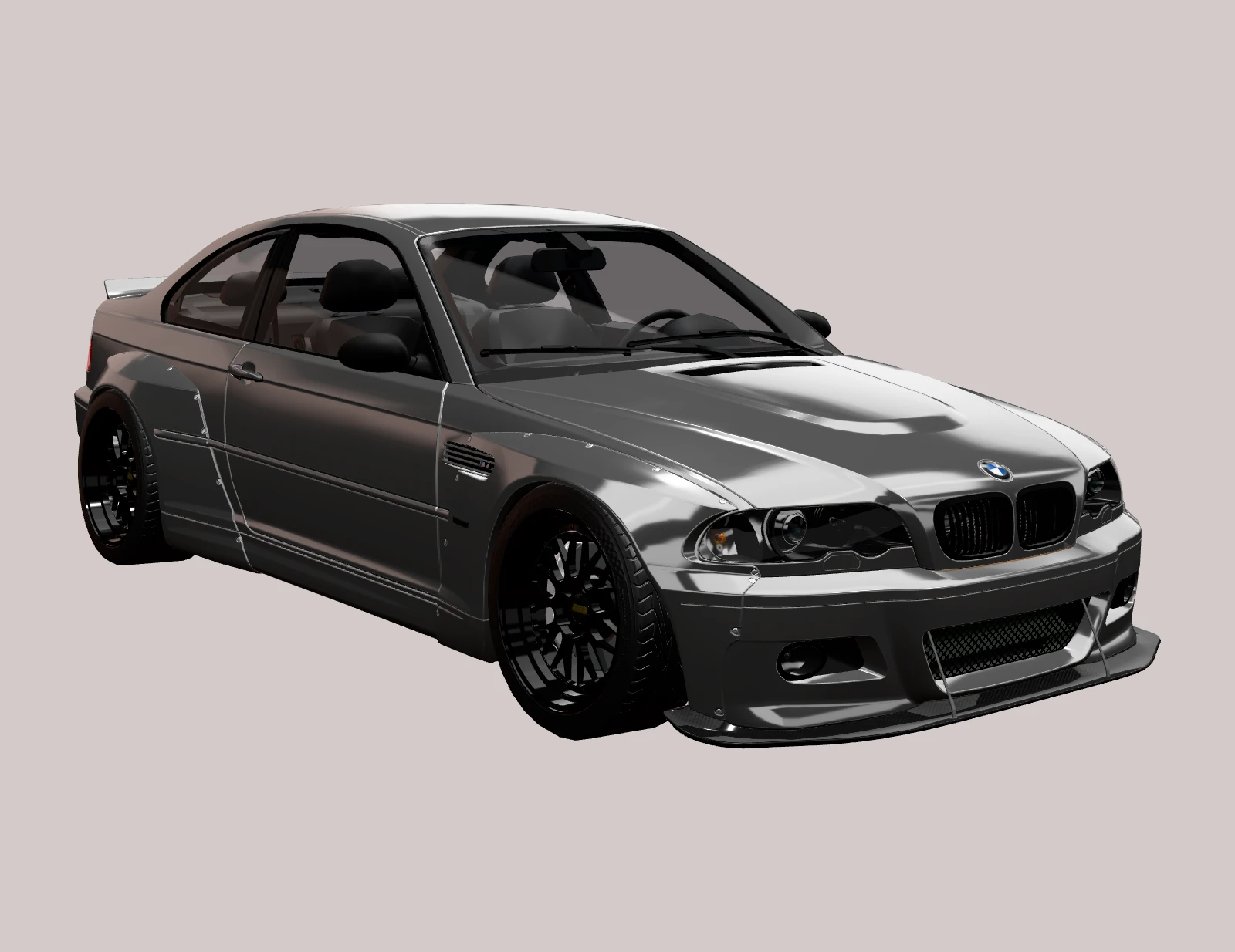
This E46 M3 buying guide is for anyone who dreams of owning one of the most celebrated M cars of all time. Built from 2000 to 2006, the E46 M3 combines a high-revving straight-six, a balanced rear-wheel drive chassis and timeless design.
Prices for good cars have risen, and many cars are now more than twenty years old. Choosing the right one is more important than ever. In this guide we explain the key facts about the E46 M3, the versions available and, above all, the points to check before you buy.
The E46 M3 in brief
The E46 M3 was launched in 2000 as a coupe, followed by a convertible. At its heart is the S54, a 3.2-litre naturally aspirated straight-six with individual throttle bodies and double VANOS. In European specification it produces 343 hp and revs to 8,000 rpm.
The car was offered with a six-speed manual gearbox or the SMG II automated manual gearbox. The chassis combines a wider track, M-specific suspension and a variable M differential lock at the rear.
The E46 M3 is admired for its balance of performance and everyday usability. It is fast enough to be exciting today, yet compact, analogue and relatively simple compared with modern M cars. Our article on the BMW M3 generations places it in the history of the model.
Special versions: CSL and Competition
Two special versions are especially sought after:
- M3 CSL (2003). A lightweight version with a carbon-fibre roof, carbon interior parts, a special intake system and 360 hp. It was built in a limited run of around 1,400 cars and came only with SMG. Today it is a collector's car with prices to match. Our article on BMW CS, CSL and GTS models explains the history of the CSL name.
- Competition Package. Offered from around 2005 in several markets, it added a quicker steering rack, larger cross-drilled brakes, lightweight 19-inch wheels and revised settings for the stability control.
When considering a special version, verify its authenticity carefully with the original documents and the VIN. Our guide on how to read a BMW VIN helps with this.
Engine checks: the S54
The S54 is a wonderful engine, but it needs care. Key points for any E46 M3 buying guide:
- Rod bearings. Like other high-revving M engines, the S54 can suffer from rod bearing wear. Many owners replace the bearings preventively. Ask for invoices.
- VANOS. The double VANOS system can develop faults, from worn seals to loose hardware. Specialists offer updated parts. Listen for rattles and check for fault codes.
- Oil consumption. Some consumption is normal on a high-revving engine, but large amounts need investigation. Our article on BMW oil consumption shows how to measure it correctly.
- Cooling system. Water pump, thermostat, expansion tank and hoses should be in good condition.
- Cold start. The engine should start cleanly and idle smoothly once warm.
A healthy S54 feels eager and smooth all the way to its limit. Never rev a cold engine, and only test high revs once the oil is fully warm.
Gearbox: manual or SMG II
The six-speed manual gearbox is robust and very popular, which is reflected in prices. Check the clutch, the gear change and listen for noises from the gearbox and differential.
SMG II offers fast, automated gear changes with paddles. It is less popular than the manual today, but it gives the car a special character. Its weak points are the hydraulic pump and the clutch wear, which must be checked. Our article on BMW SMG III explains how BMW developed this technology further, and our comparison of manual, SMG, DCT and Steptronic gearboxes helps you choose.
On SMG cars, ask for a diagnostic check of the clutch wear values and listen for the pump running unusually long or often.
Body and chassis: the subframe question
One of the most important checks on an E46 M3 is the rear subframe mounting area. On some E46 models, cracks can develop in the floor where the rear subframe is attached to the body. The E46 M3, with its higher power and grip, is particularly exposed.
A specialist can inspect this area from below. Repairs usually involve reinforcement plates welded into the floor. A properly repaired car is not a problem, but an unrepaired crack must be taken seriously.
Other body and chassis checks include:
- Rust, especially around the wheel arches, jacking points and boot.
- Suspension bushings, often worn on older cars. Our guide to BMW suspension bushings explains the signs.
- Accident damage, uneven panel gaps and paint differences.
- Convertible roof operation and seals on convertibles.
Interior, electrics and history
The interior of a well-kept E46 M3 ages well, but check:
- Seat bolsters for wear, especially on the driver's seat.
- Electrics, including windows, climate control and instrument cluster.
- Warning lights in the instrument cluster.
The service history is crucial. Look for regular oil changes with the correct oil, VANOS and rod bearing work, cooling system parts, subframe inspection and repair, and evidence of how the car was used. A car that has been tracked is not automatically bad, but it needs closer inspection.
Original cars are generally more valuable. Modifications are not necessarily a problem if they are of good quality and documented, but unknown modifications are a risk.
E46 M3 buying guide: test drive and final advice
On the test drive, make sure the engine is fully warm before using high revs. The S54 should pull strongly and smoothly to 8,000 rpm. Check that the steering is precise, the car runs straight and the brakes work evenly without vibration.
Listen for knocks from the suspension, whines from the differential and rattles from the engine. Check that the gear changes are smooth, whether manual or SMG.
The final advice of this E46 M3 buying guide is simple: buy the best car you can afford, with full history and a pre-purchase inspection by an M specialist. A good E46 M3 is one of the most rewarding driver's cars ever made. Our checklist for buying a used BMW M car gives you even more points to check.
BMW E46 M3 key facts
| Item | Details |
|---|---|
| Production | 2000 to 2006, coupe and convertible |
| Engine | S54 3.2-litre naturally aspirated straight-six |
| Power (EU) | 343 hp, revs to 8,000 rpm |
| Gearboxes | 6-speed manual or SMG II |
| Special versions | M3 CSL (2003, about 1,400 cars), Competition Package |
| Key engine checks | Rod bearings, VANOS, cooling system, oil consumption |
| Key body check | Rear subframe mounting area for cracks |
Frequently asked questions
Is the E46 M3 a reliable car?
It can be, when well maintained. Known issues include rod bearings, VANOS, cooling system parts and the rear subframe mounting area.
Should I buy a manual or SMG E46 M3?
The manual is more popular and simpler. SMG II gives fast changes but needs checks of the pump and clutch wear.
What is the E46 M3 subframe problem?
Cracks can develop in the floor where the rear subframe attaches. It should be inspected and, if needed, reinforced by a specialist.
How much power does the E46 M3 have?
The European version of the S54 produces 343 hp. The CSL produces 360 hp.
Are E46 M3 rod bearings a problem?
They are a known wear item on the high-revving S54. Many owners replace them preventively.
Sources
Related posts
 X5 MBimmer Garage21 Oct 2026
BMW X5 M F95: the 625 hp family SUV, S68 update, X6 M differences and specs
The BMW X5 M F95 is the M version of the G05 X5: a 625 hp twin-turbo V8, M xDrive and space for five. Its versions, the S68 mild hybrid update, chassis, X5 M vs X6 M, practicality, running costs and full specifications.
0210 min read
 M2 G87Bimmer Garage21 Oct 2026
BMW M2 G87 with ADRO carbon aero kit: splitter, diffuser, wing and what they do
A 2023 BMW M2 G87 with a carbon fibre aero kit from ADRO: what is in the kit, how splitter, diffuser and wing work, carbon fibre quality, fitting, track use, care, road rules and whether it is worth it.
0110 min read
 M2 G87Bimmer Garage21 Oct 2026
BMW M2 G87: history, S58 engine, manual or automatic, M2 CS and specs
The BMW M2 G87 is the second-generation M2: an S58 twin-turbo straight-six with up to 480 hp, rear-wheel drive and a manual or automatic gearbox. Its history, engine, chassis, versions, performance and full specifications.
029 min read
 M6 Gran CoupéBimmer Garage19 Oct 2026
BMW M6 Gran Coupé F06: the four-door M6, V8 specs and buying guide
The BMW M6 Gran Coupé F06 was the first four-door M6: the 560 hp twin-turbo V8 of the M5 in an elegant coupé body. Its history, engine, performance, specs and a buying guide.
0129 min read
Comments 0
Join the conversation — be kind, no links.
Loading comments…