
BMW M5 E34: history, S38 engine, M5 Touring, specs and buying guide
The BMW M5 E34 was the last M5 built by hand in Garching: a calm 5 Series with a 315–340 hp straight-six. Its history, the S38 engine, the M5 Touring, specs and a buying guide.
10 views 1 reading now 0 comments 10 min read
 View in 3D
On this page
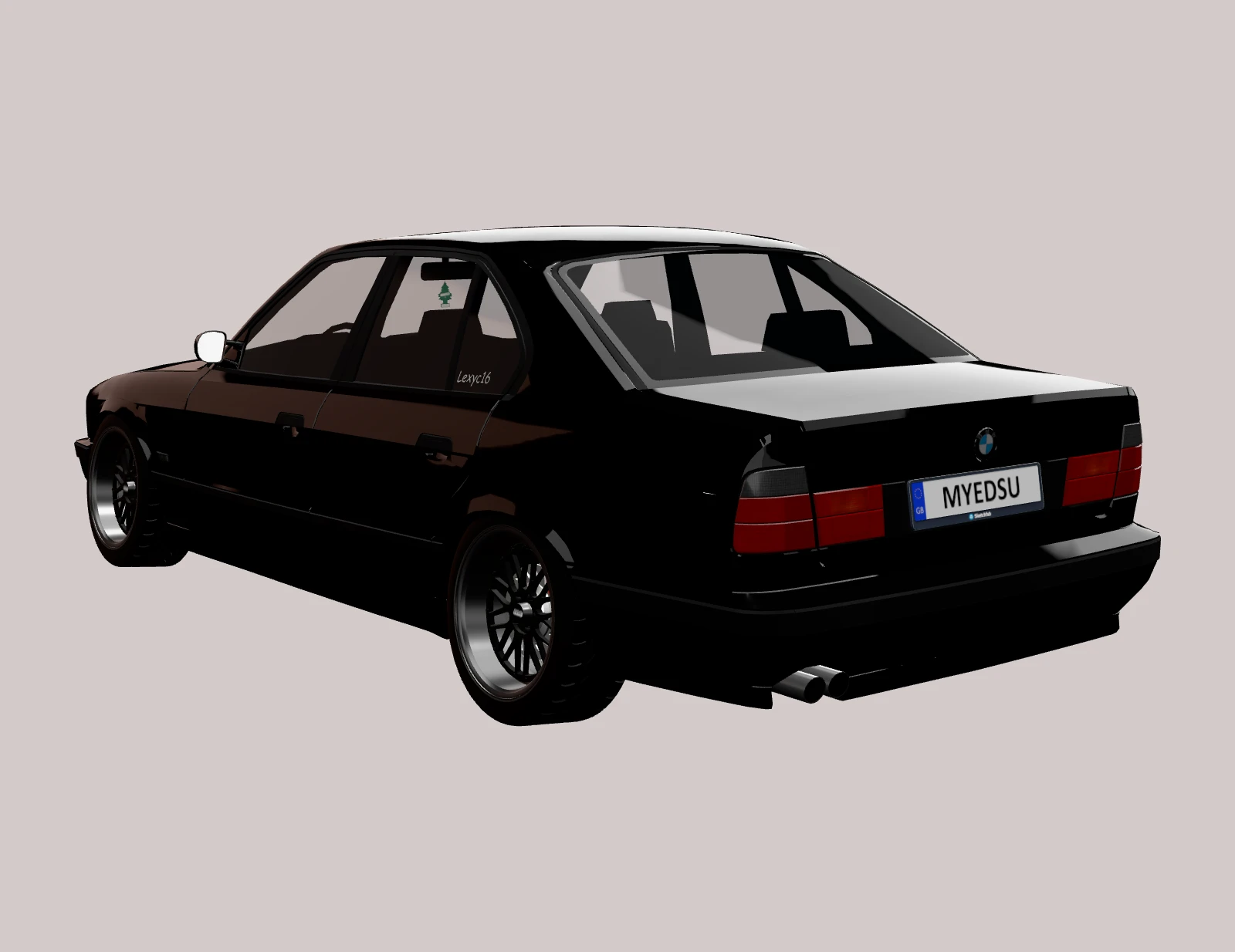
The BMW M5 E34 is the second-generation M5 and the last one built by hand at BMW Motorsport in Garching. From 1988 to 1995 it combined the quiet body of the E34 5 Series with a naturally aspirated straight-six of 315 and later 340 hp.
In this guide we look at where the E34 M5 came from, how the S38 engine works, the rare M5 Touring and special editions, the full specifications and the most important checks before you buy one.
Where the BMW M5 E34 came from
The first M5, based on the E28 5 Series, showed in 1985 that a family saloon could be as fast as a sports car. When BMW launched the new E34 5 Series at the beginning of 1988, BMW Motorsport GmbH started work on its successor at once.
The second-generation M5 was presented in 1988 and went into production at the end of that year. Like the first M5, it was not built on the normal production line. The bodies came from the BMW plant in Dingolfing, and the cars were then assembled and finished by hand by BMW Motorsport in Garching near Munich.
The idea stayed the same: a quiet, comfortable four-door saloon with the heart of a race car. From the outside, only small details showed what was under the bonnet. Many people walked past an E34 M5 without noticing it was anything special.
Production ended in 1995, after about 12,250 cars, including 891 M5 Touring estates. The E34 was the last M5 finished by hand in Garching. Its successor, the V8-powered E39 M5, was built on the main assembly line in Dingolfing.
The S38 straight-six: 3.6 and 3.8 litres
The heart of the E34 M5 is the S38, a naturally aspirated straight-six with two overhead camshafts, four valves per cylinder and six individual throttle bodies. It is a development of the M88 engine from the BMW M1 supercar and the first M5.
At launch, the S38B36 had a capacity of 3,535 cc. It produced 315 hp (232 kW) at 6,900 rpm and 360 Nm of torque at 4,750 rpm. With this engine, the M5 reached 100 km/h in about 6.3 seconds, and its top speed was limited to 250 km/h.
From 1992 (model year), BMW Motorsport fitted the larger S38B38. A longer stroke and a bigger bore raised the capacity to 3,795 cc. Power increased to 340 hp (250 kW) at 6,900 rpm and torque to 400 Nm at 4,750 rpm. The 3.8 also received a lighter flywheel and an improved engine management system, and it reaches 100 km/h in about 5.9 seconds.
Both engines love to rev and have a hard, metallic sound at high rpm. They need regular valve clearance checks and good-quality oil, but a well-maintained S38 is a strong and durable engine.
Gearbox, chassis and brakes
Every E34 M5 has a manual gearbox and rear-wheel drive. An automatic gearbox was never offered. Early cars and the 3.6 use a five-speed Getrag gearbox. From 1994, European 3.8 models received a six-speed Getrag gearbox, which made better use of the engine's power band.
A limited-slip differential with 25 per cent locking effect helps the rear wheels put the power down. The chassis is lower and stiffer than that of a normal 5 Series, with reinforced suspension parts, a quicker steering ratio and larger anti-roll bars. Many 3.8 cars have EDC, an electronic damper control system with adjustable settings, and self-levelling rear suspension.
The brakes were upgraded several times. The 3.8 has larger discs than the 3.6, and the Nürburgring package, offered in Europe from 1994, added even bigger floating front brakes, 18-inch wheels, a sharper suspension set-up and Servotronic steering.
The result is a heavy car, at about 1,700 kg, that still feels balanced and precise. It is not as sharp as a modern M car, but it rewards a smooth driving style and gives the driver a lot of feedback.
Design and interior
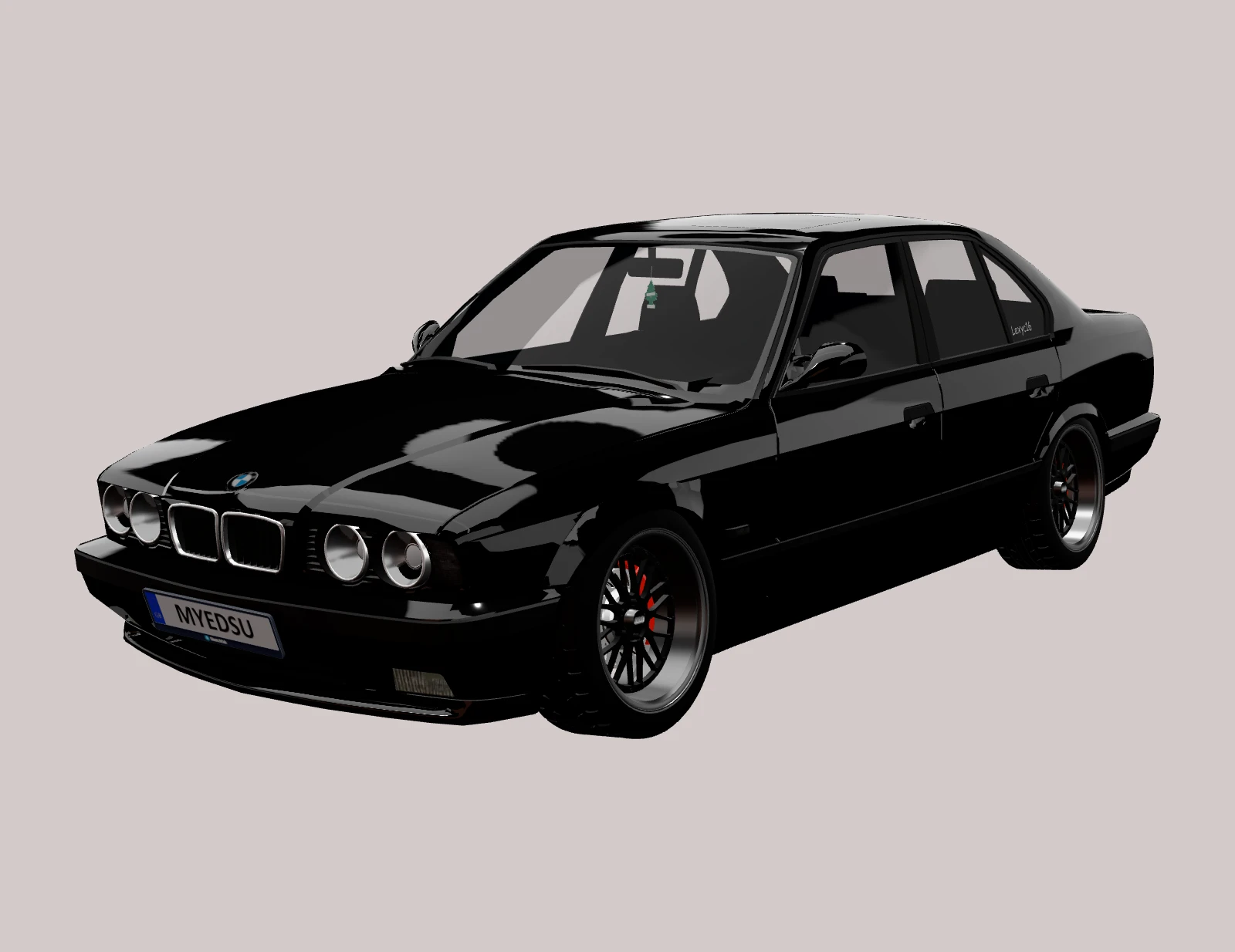
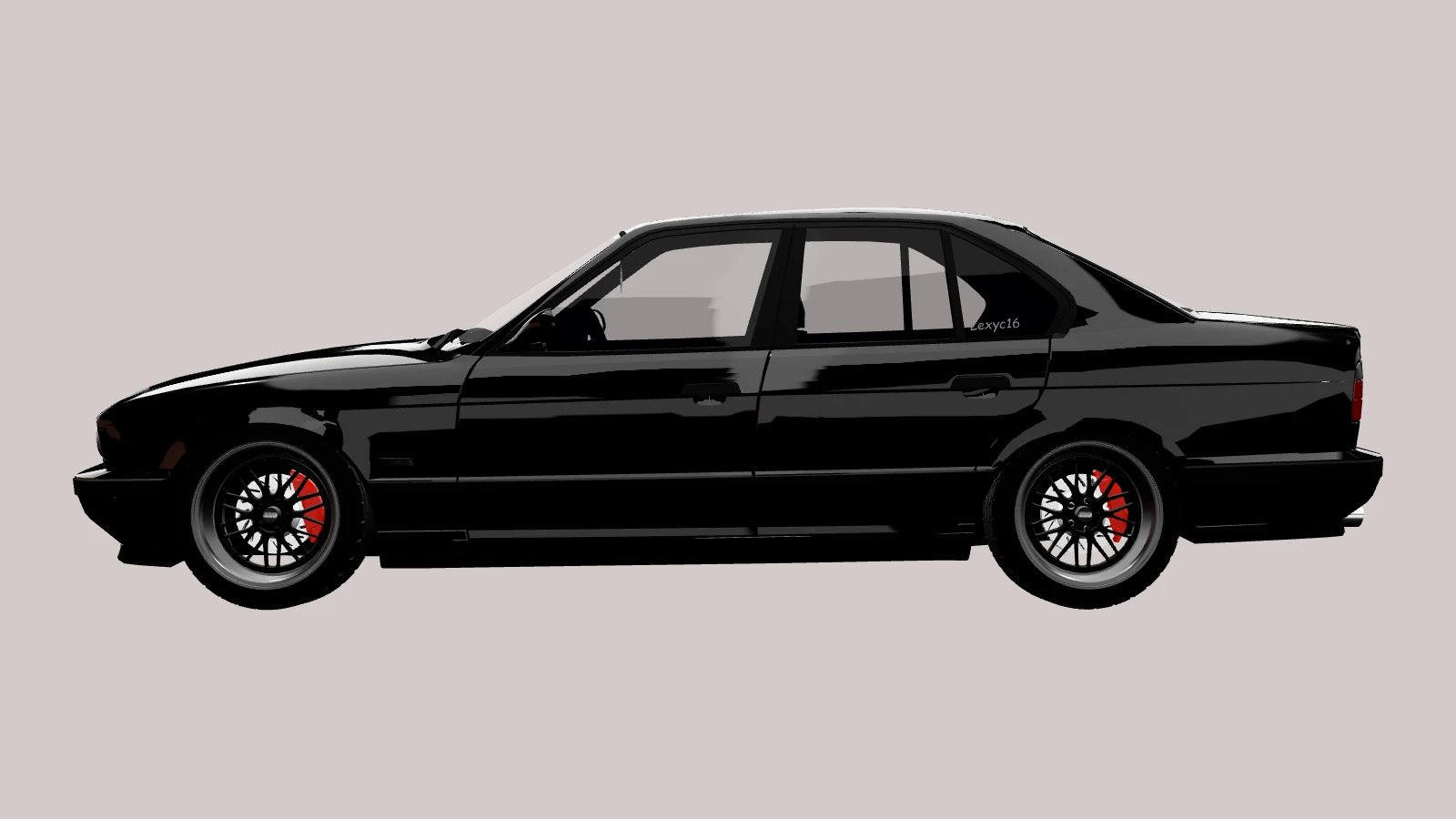
The E34 M5 is a classic "Q-car": it looks almost like a normal 5 Series. BMW Motorsport only made small changes to the body. There is a deeper front spoiler with integrated fog lights, side skirts, a rear apron and small M5 badges at the front and rear.
The most recognisable detail is the wheels. Early cars have the "turbine" style M System wheels, with a cover that guided cooling air to the brakes. Later cars received the M System II "throwing star" wheels in 17-inch size, and the Nürburgring package added 18-inch wheels.
Inside, the E34 M5 is a comfortable and well-built business saloon. The dashboard is angled towards the driver, a typical BMW feature of the time. The M5 adds sports seats, an M leather steering wheel, an M gear knob and special instruments with a red needle and the M logo.
Most cars were well equipped, with leather seats, air conditioning, electric windows and a sunroof. Some customers ordered special colours and interior trims from BMW Individual, so many E34 M5s are quite unique.
M5 Touring and special editions
In 1992 BMW Motorsport presented the M5 Touring, the first M5 estate. It used the 340 hp 3.8 engine and the same chassis as the saloon, with self-levelling rear suspension. Only 891 were built until 1995, which makes it one of the rarest M5 models. It was not sold in North America.
There were also several small special editions. These are some of the best-known:
- 20 Jahre Motorsport (1992): a run of cars in Mugello red or Jet black with special interior details, celebrating 20 years of BMW Motorsport GmbH.
- Cecotto and Winkelhofer (1992): small series named after the racing driver Johnny Cecotto and the then head of BMW Motorsport sales, with extra power in some markets and special colours.
- UK Limited Edition (1994): a series for the British market with special paint and equipment.
- Elekta (Italy) and other national editions in very small numbers.
North American buyers received the M5 only from 1991 to 1993, and only with the 3.6 engine. Because of all these variants, it is worth checking the history and documents of every car carefully.
Driving the BMW M5 E34 today
More than thirty years after its launch, the E34 M5 still feels fast and very mechanical. There is no turbo lag and no electronic sound enhancement. The engine pulls cleanly from low rpm, and above 4,000 rpm the straight-six becomes louder and harder until the redline.
The steering is light at low speed but precise on the road. The manual gearbox has a long but positive shift, and the heavy clutch reminds you that this is a car from the late 1980s. With EDC, the ride is comfortable enough for long journeys.
Compared with a modern M5, the E34 is slower and has much less grip. But it gives the driver more feedback and asks for more skill. That is exactly why many enthusiasts love it today. It feels like a real driver's car with four doors and a large boot.
In everyday use the E34 M5 is surprisingly practical. It is not too wide, the visibility is very good and it has space for four adults and their luggage. With good maintenance it can be used regularly, not only on sunny Sundays.
Buying guide: what to check
Good E34 M5s are rare and prices have risen strongly, so a careful inspection is essential. These are the main points to check:
- Rust: sills, jacking points, the rear wheel arches, the area around the rear window, the bottom of the doors and the spare wheel well. Rust repairs can be expensive.
- Engine: service history, valve clearance checks, oil leaks and smooth running. The throttle body linkage must be adjusted correctly, or the engine idles badly.
- Timing chain and cooling system: listen for chain noise and check the radiator, water pump and hoses.
- Gearbox and clutch: check that all gears engage smoothly and that the clutch does not slip. Six-speed parts are harder to find.
- EDC and self-levelling suspension: the special dampers and the levelling system are expensive to replace. Check for leaks and warning lights.
- Brakes and wheels: check the size of the discs and the condition of the original M System wheels.
- Electrics: the check control system, the windows, the central locking and the instrument cluster.
- Documents: a complete history, the correct engine number and proof of special edition status if the seller claims one.
If possible, have the car checked by a specialist who knows the S38 engine before you buy.
Running costs and is the E34 M5 a classic?
The E34 M5 is not a cheap car to run, but it can be reliable when it is looked after properly. The engine needs regular oil changes with the correct oil, valve clearance checks at the right intervals and a careful warm-up before high revs.
Many parts are still available from BMW Group Classic and from specialists, but some M-specific parts, such as body panels, wheels, EDC dampers and special interior trims, have become rare and expensive. A good independent specialist who knows the S38 engine is worth a lot.
Fuel consumption depends on how you drive. On a calm journey it is reasonable for a 3.8-litre engine, but in fast driving it rises quickly. Insurance for classic cars can be affordable if you use the car as a second car.
Is the E34 M5 a classic? Clearly yes. It is the last hand-built M5, it has one of the best engines BMW Motorsport ever made, and it combines everyday comfort with real performance. Prices for good cars, especially the 3.8, the M5 Touring and the special editions, have risen in recent years. A well-kept E34 M5 is a car to enjoy and to keep.
BMW M5 E34 specifications
Specification Value
Production 1988–1995 (assembled by hand at BMW Motorsport, Garching)
Body 4-door saloon; M5 Touring estate 1992–1995
Engine (3.6) S38B36 straight-six, 3,535 cc, 24 valves
Power (3.6) 315 hp (232 kW) at 6,900 rpm
Torque (3.6) 360 Nm at 4,750 rpm
Engine (3.8) S38B38 straight-six, 3,795 cc, 24 valves
Power (3.8) 340 hp (250 kW) at 6,900 rpm
Torque (3.8) 400 Nm at 4,750 rpm
Induction Naturally aspirated, six individual throttle bodies
Gearbox 5-speed manual; 6-speed manual from 1994 (Europe, 3.8)
Drive Rear-wheel drive, 25% limited-slip differential
0–100 km/h About 6.3 s (3.6) / about 5.9 s (3.8)
Top speed 250 km/h (electronically limited)
Weight About 1,670 kg (3.6) to 1,720 kg (3.8), DIN
Suspension Lowered M sports suspension; EDC dampers on many 3.8 cars
Wheels 17-inch M System wheels; 18-inch with Nürburgring package
Length / width 4,720 mm / 1,751 mm
Wheelbase 2,761 mm
Units built About 12,250 in total, including 891 M5 Touring
Predecessor / successor M5 E28 (1985–1988) / M5 E39 (1998–2003)
Frequently asked questions
How much horsepower does the BMW M5 E34 have?
The first E34 M5 with the 3.6-litre S38 engine has 315 hp (232 kW). From 1992 the 3.8-litre version has 340 hp (250 kW) at 6,900 rpm and 400 Nm of torque.
How fast is the BMW M5 E34?
The 3.6 reaches 100 km/h in about 6.3 seconds and the 3.8 in about 5.9 seconds. Top speed is electronically limited to 250 km/h.
Was the BMW M5 E34 built by hand?
Yes. The bodies came from the Dingolfing plant, and BMW Motorsport assembled and finished the cars by hand in Garching. The E34 was the last M5 built this way; the E39 M5 was built on the main line in Dingolfing.
How many BMW M5 E34 were built?
About 12,250 E34 M5s were built between 1988 and 1995. Only 891 of them are M5 Touring estates, which makes the Touring one of the rarest M5 models.
Is there an automatic BMW M5 E34?
No. Every E34 M5 has a manual gearbox: a five-speed Getrag gearbox, or a six-speed gearbox in European 3.8 cars from 1994.
What should I check before buying an M5 E34?
Check for rust, the service history of the S38 engine, the timing chain and cooling system, the clutch and gearbox, the EDC and self-levelling suspension and the electrics. Have the car inspected by an S38 specialist if possible.
Sources
- BMW Group Classic – model history and archive of the BMW M5 (E34)
- BMW M – history of the BMW M5
- BMW Group PressClub – historic press material on the BMW M5
- BMW M5 (E34) owner's handbook and technical data
Related posts
 M6 Gran CoupéBimmer Garage19 Oct 2026
BMW M6 Gran Coupé F06: the four-door M6, V8 specs and buying guide
The BMW M6 Gran Coupé F06 was the first four-door M6: the 560 hp twin-turbo V8 of the M5 in an elegant coupé body. Its history, engine, performance, specs and a buying guide.
089 min read
 M5 F10Bimmer Garage19 Oct 2026
BMW M5 F10: history, S63 V8, Competition Package, 30 Jahre and specs
The BMW M5 F10 was the first M5 with turbocharging: a 560 hp twin-turbo V8, M DCT and rear-wheel drive. Its history, engine, special editions, performance and full specifications.
0129 min read
 Buying guidesBimmer Garage19 Oct 2026
BMW E53 X5 buying guide: the original BMW SUV
The E53 X5 was the first BMW SUV and is now an affordable modern classic. This buying guide covers the engines, all-wheel drive, the 2004 facelift, common issues and what to check before buying.
065 min read
Buying guidesBimmer Garage19 Oct 2026
BMW E84 X1 buying guide: the first X1 explained
The E84 X1 was the first BMW X1 and the last with a rear-wheel drive layout. This guide covers the engines, sDrive and xDrive versions, the facelift, common issues and what to check before buying.
024 min read
Comments 0
Join the conversation — be kind, no links.
Loading comments…