
BMW M4 F82: history, specs and buying guide
The BMW M4 F82 replaced the M3 Coupé in 2014 with a 431 hp twin-turbo straight-six. Its story, the versions, the full specs and what to check before you buy one.
59 views 1 reading now 0 comments 11 min read
On this page
The BMW M4 F82 is the coupé that replaced the M3 Coupé in 2014. BMW gave the two-door M car its own name, in line with the new 4 Series, and a completely new engine: the S55, a 3.0-litre straight-six with two turbochargers, 431 hp and 550 Nm.
It was quicker than the V8 M3 E92 it replaced, lighter thanks to carbon fibre, and far stronger in the mid-range. It also split opinion: some missed the old high-revving V8, others loved the huge torque and the everyday usability.
In this guide we look at where the M4 came from, how the S55 works, what the Competition, CS and GTS versions changed, the full specifications and the most important checks before you buy a used one.
From M3 Coupé to M4: the history of the F82
For almost thirty years the two-door M3 was the heart of BMW M. When BMW moved its coupés and convertibles into the new 4 Series in 2013, the M version had to follow, and the M4 was born. The four-door saloon kept the M3 name as the F80, while the coupé became the F82 and the convertible the F83.
BMW first showed the idea as the Concept M4 Coupé at the Pebble Beach Concours d'Elegance in August 2013. The production car followed at the Detroit motor show in January 2014, and the first customers received their cars from June 2014.
The biggest change was under the bonnet. After the V8 of the M3 E92, the M4 went back to six cylinders, but this time with two turbochargers. That decision was driven by efficiency and emissions rules, yet it also gave the car far more torque than any M3 before it.
During its life BMW kept improving the car: a Competition Package in 2016, the track-focused M4 GTS the same year, the M4 CS in 2017 and a light update (LCI) with new LED lights. Production ended in 2020, when the new M4 G82 took over.
Design and lightweight construction
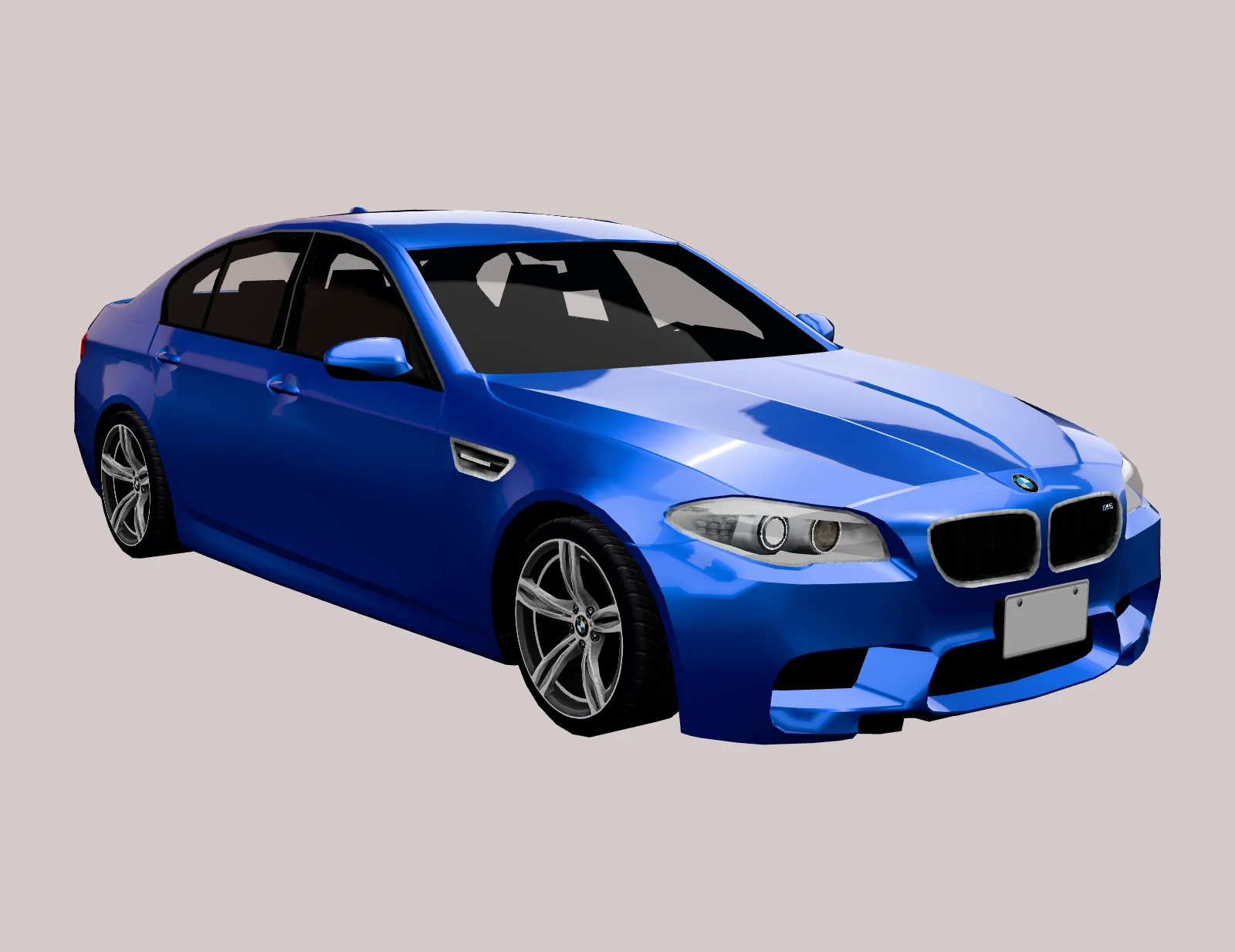
The M4 F82 is based on the 4 Series coupé, but almost every visible panel is specific to the M car. It is wider, with flared front wings, large air intakes, side gills with the M4 badge and the classic four exhaust tips at the back. The bonnet has a central power dome, a design detail that goes back to earlier M3 generations.
Weight was a priority. BMW used carbon-fibre reinforced plastic (CFRP) for the roof, the boot lid, the strut brace in the engine bay and the propeller shaft on early cars. Aluminium was used for the bonnet, the front wings and many suspension parts. According to BMW, a manual coupé weighs 1,497 kg (DIN), clearly lighter than the M3 E92 it replaced.
Inside, the M4 has sports seats with illuminated M4 logos, carbon trim, a thick M steering wheel and the familiar BMW iDrive system. It is a real four-seater with a usable boot, which is one of the reasons why the M4 works so well as an everyday car.
The 2017 update (LCI) brought full-LED headlights and new rear lights, plus small changes inside. Many owners consider the LCI rear lights the nicer design.
The S55 engine: twin turbos and 550 Nm
The heart of the M4 is the S55B30, a 3.0-litre straight-six developed by BMW M. It uses a closed-deck aluminium block, a forged crankshaft and two mono-scroll turbochargers, one for each group of three cylinders. Direct injection, Valvetronic and Double VANOS complete the package.
The numbers tell the story:
- 431 hp (317 kW) from 5,500 to 7,300 rpm
- 550 Nm from just 1,850 rpm up to 5,500 rpm
- 2,979 cc, bore 84.0 mm, stroke 89.6 mm
Compared with the S65 V8 of the M3 E92, the S55 makes around 40% more torque and delivers it much earlier. In real driving this means the M4 accelerates hard in almost any gear, without needing high revs. The price is a different character: the S55 does not have the sharp, high-revving response of a naturally aspirated M engine, and its sound is more industrial.
BMW also used the S55 as the base for its special versions. The Competition Package raised power to 450 hp, the M4 CS to 460 hp and 600 Nm, and the M4 GTS used water injection to reach 500 hp. The basic engine is strong, which is why the S55 is also very popular with tuners.
Gearboxes, chassis and how the M4 F82 drives
Buyers could choose between a 6-speed manual gearbox with automatic rev-matching and a 7-speed M DCT dual-clutch transmission. The DCT is faster: BMW quotes 0–100 km/h in 4.1 seconds with the DCT and 4.3 seconds with the manual. Top speed is limited to 250 km/h, or 280 km/h with the optional M Driver's Package.
Power goes to the rear wheels through an electronically controlled Active M Differential, which can lock progressively to improve traction out of corners. The front axle uses aluminium parts and a very stiff subframe connection. Adaptive M suspension and M carbon-ceramic brakes were available as options.
The M4 was the first M3/M4 with electric power steering. It is precise and quick, but many drivers say it gives less feedback than the hydraulic system of the older cars.
On the road the M4 F82 is very fast and very grippy, but it asks for respect. With so much torque available so early, the rear tyres can lose grip quickly on cold or wet roads, especially in the sportier driving modes. The Competition Package made the chassis calmer and more precise, and many enthusiasts see it as the best version for everyday driving.
Versions: Competition, GTS, CS and special editions
The M4 F82 was offered in several versions during its life:
- M4 Coupé and Convertible (2014): 431 hp, manual or DCT. The F83 convertible has a folding metal roof and is heavier than the coupé.
- Competition Package (2016): 450 hp, retuned adaptive suspension, differential and stability control, lighter M sports seats and 20-inch wheels. With DCT it reaches 100 km/h in 4.0 seconds.
- M4 GTS (2016): the most extreme version. Water injection raised power to 500 hp and torque to 600 Nm. It has adjustable track suspension, many carbon parts, OLED rear lights and an adjustable rear wing. Only 700 were built, and BMW quoted a Nürburgring Nordschleife lap of about 7 minutes 28 seconds.
- M4 CS (2017): 460 hp and 600 Nm, positioned between the Competition and the GTS, with a carbon bonnet and a lighter interior. BMW planned around 3,000 units.
- M4 Edition M Heritage (2019): a final edition of 750 cars in Laguna Seca Blue, Velvet Blue or Imola Red, based on the Competition model.
There were also smaller editions such as the DTM Champion Edition and the M4 Convertible Edition 30 Jahre. Limited versions like the GTS and CS are now collector cars and are priced well above a standard M4.
Life with an M4 F82: running costs and maintenance
An M4 F82 can be a reliable daily car if it is serviced properly. Like every high-performance car, however, it costs more to run than a normal 4 Series.
Oil and fluids. The S55 works hard, especially when driven fast or on track. Many owners change the engine oil more often than the on-board service indicator suggests. The DCT gearbox and the rear differential also need fresh fluid at regular intervals.
Tyres and brakes. The M4 uses wide, staggered tyres and they wear quickly, especially the rears. Steel brakes are strong but heavy users will replace pads and discs often. The optional carbon-ceramic brakes last longer on the road but are very expensive to replace.
Cooling and turbos. The engine has several radiators and a sophisticated cooling system. Keep an eye on coolant levels and leaks. The turbochargers themselves are generally robust when the oil is changed on time.
Fuel. Expect real-world consumption of around 10–13 litres per 100 km in mixed driving, more if you use the performance often.
The best way to keep costs under control is simple: buy a car with a complete history, use a specialist who knows the S55 and do not skip the small jobs.
Buying a used BMW M4 F82: what to check
A good M4 F82 is a great buy, but there are many modified and hard-driven cars on the market. Take your time and check these points:
- Service history. Look for regular oil changes, DCT and differential services and receipts for any repairs.
- Modifications. The S55 is easy to tune, and many cars have more power than standard. A professionally tuned car can be fine, but extra power puts more stress on the engine, gearbox and tyres.
- Crank hub. On the S55, the hub at the front of the crankshaft is pressed on rather than keyed. Under very high torque, often on tuned cars, it can slip and upset the engine timing. Many owners fit an upgraded pinned or keyed crank hub as prevention, so ask if this has been done.
- Charge pipe. The original plastic charge pipe can crack, especially with higher boost. Listen for hissing and watch for a loss of power.
- Track use and accidents. Check panel gaps, paint thickness, worn kerbs on the wheels and the condition of the brakes and tyres.
- Gearbox. A DCT should shift smoothly at low speed; a manual should not crunch or slip.
If possible, have a BMW specialist read the fault memory and inspect the car before you pay. A clean, unmodified Competition model is often the best all-round choice.
M4 F82 or the newer M4 G82?
In 2020 BMW revealed the second-generation M4 G82. It uses the newer S58 engine with 480 hp, or 510 hp in Competition form, and later offered xDrive all-wheel drive. It is faster, more refined and more modern inside, but it is also bigger, heavier and more expensive, and its large front grille still divides opinion.
The F82 has a few clear advantages:
- a more compact, classic coupé shape that many fans prefer
- a lower purchase price on the used market
- a 6-speed manual on many cars, including some Competition models
- a huge tuning and parts community
The G82 is the better choice if you want the latest technology, all-wheel drive or a car with a long manufacturer warranty. The F82 is the better choice if you want a lighter, simpler and more affordable M car with plenty of character.
For many enthusiasts the M4 F82 is already becoming a modern classic: the first turbo M4, the car that started a new chapter for BMW M, and still one of the most rewarding coupés you can drive every day.
BMW M4 F82 specifications
Specification Value
Production 2014–2020 (coupé F82, convertible F83)
Body 2-door coupé, 4 seats
Engine S55B30 3.0-litre straight-six, two mono-scroll turbochargers
Displacement 2,979 cc (bore 84.0 mm × stroke 89.6 mm)
Power 431 hp (317 kW) at 5,500–7,300 rpm
Torque 550 Nm at 1,850–5,500 rpm
Transmission 6-speed manual or 7-speed M DCT
Drive Rear-wheel drive, Active M Differential
0–100 km/h 4.1 s (M DCT), 4.3 s (manual)
Top speed 250 km/h limited (280 km/h with M Driver's Package)
Weight (DIN) 1,497 kg (coupé, manual)
Competition Package (2016) 450 hp (331 kW), 0–100 km/h in 4.0 s (M DCT)
M4 CS (2017) 460 hp (338 kW), 600 Nm
M4 GTS (2016) 500 hp (368 kW), 600 Nm, water injection, 700 units
Successor BMW M4 G82 (revealed in 2020)
Frequently asked questions
How much horsepower does the BMW M4 F82 have?
The standard M4 F82 has 431 hp (317 kW) and 550 Nm from its 3.0-litre twin-turbo S55 engine. The Competition Package raised power to 450 hp, the M4 CS to 460 hp and the limited M4 GTS to 500 hp with water injection.
How fast is the BMW M4 F82 from 0 to 100 km/h?
BMW quotes 4.1 seconds with the 7-speed M DCT and 4.3 seconds with the 6-speed manual. With the Competition Package and DCT the time drops to 4.0 seconds, and the M4 GTS needs 3.8 seconds.
Is the BMW M4 F82 reliable?
Yes, when it is maintained properly. The S55 engine and gearboxes are generally strong. The best-known weak points are the crank hub on heavily tuned cars and the plastic charge pipe. A full service history and an inspection by a BMW specialist are the best protection.
What is the difference between the M3 F80 and the M4 F82?
They are technically almost the same car, with the same S55 engine, gearboxes and most chassis parts. The M3 F80 is a four-door saloon, while the M4 F82 is a two-door coupé (and the F83 a convertible) with a lower roof and a sportier shape.
Manual or DCT: which M4 F82 should I buy?
The 7-speed M DCT is faster and easier in traffic, and most M4s were built with it. The 6-speed manual is rarer and more involving, and it is popular with enthusiasts. Both are good; choose the one you enjoy driving and check the service history of the gearbox.
Sources
Related posts
 M2 G87Bimmer Garage21 Oct 2026
BMW M2 G87 with ADRO carbon aero kit: splitter, diffuser, wing and what they do
A 2023 BMW M2 G87 with a carbon fibre aero kit from ADRO: what is in the kit, how splitter, diffuser and wing work, carbon fibre quality, fitting, track use, care, road rules and whether it is worth it.
0110 min read
 M2 G87Bimmer Garage21 Oct 2026
BMW M2 G87: history, S58 engine, manual or automatic, M2 CS and specs
The BMW M2 G87 is the second-generation M2: an S58 twin-turbo straight-six with up to 480 hp, rear-wheel drive and a manual or automatic gearbox. Its history, engine, chassis, versions, performance and full specifications.
029 min read
 M6 Gran CoupéBimmer Garage19 Oct 2026
BMW M6 Gran Coupé F06: the four-door M6, V8 specs and buying guide
The BMW M6 Gran Coupé F06 was the first four-door M6: the 560 hp twin-turbo V8 of the M5 in an elegant coupé body. Its history, engine, performance, specs and a buying guide.
0129 min read
 M5 F10Bimmer Garage19 Oct 2026
BMW M5 F10: history, S63 V8, Competition Package, 30 Jahre and specs
The BMW M5 F10 was the first M5 with turbocharging: a 560 hp twin-turbo V8, M DCT and rear-wheel drive. Its history, engine, special editions, performance and full specifications.
0199 min read
Comments 0
Join the conversation — be kind, no links.
Loading comments…