
BMW M3 E92: history, S65 V8, specs and buying guide
The BMW M3 E92 put a 420 hp V8 that revs to 8,400 rpm into an elegant coupé with a carbon roof. Its history, specs, common problems and a practical buying guide.
155 views 1 reading now 2 comments 11 min read last comment by Hzhzhb
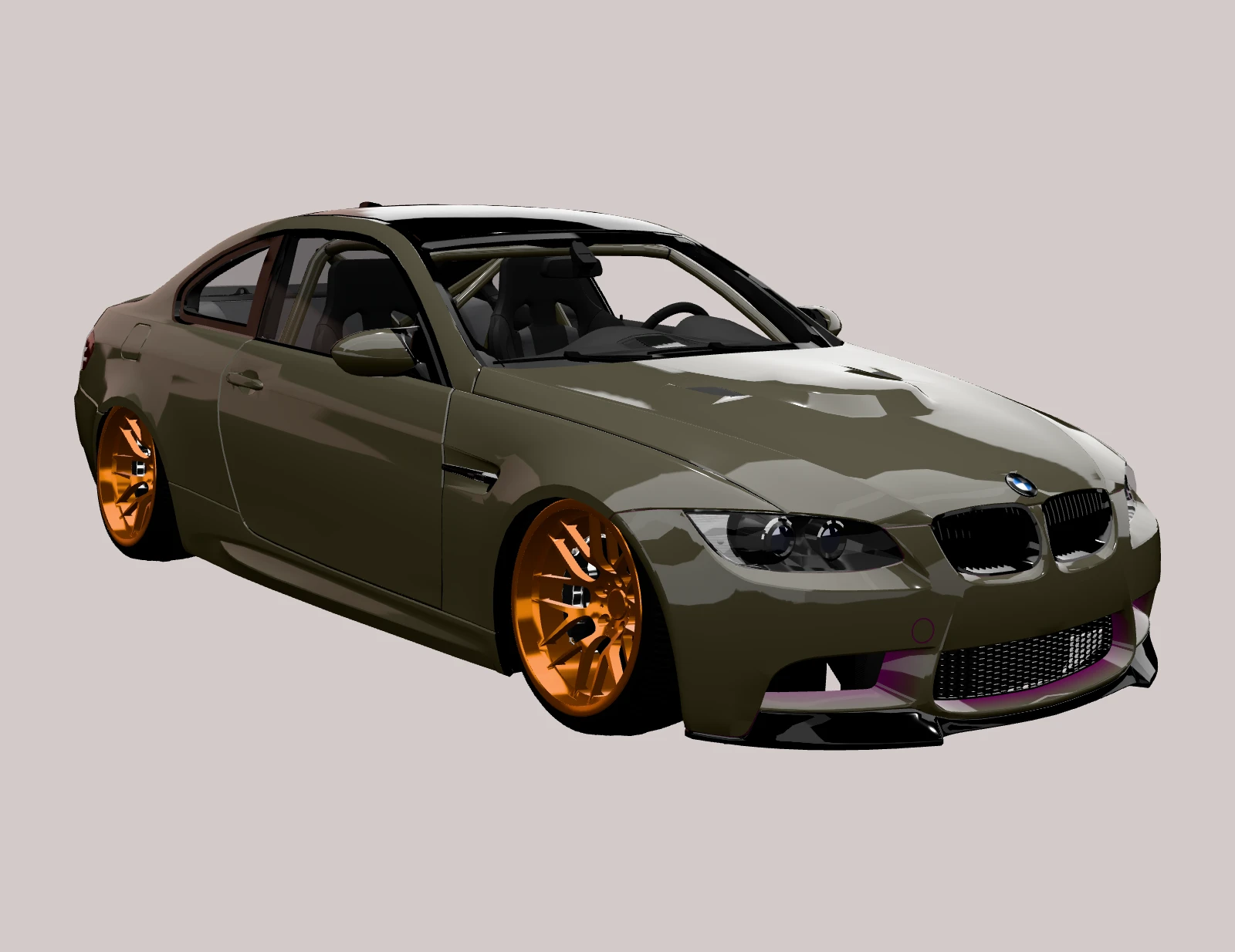 View in 3D
On this page
The BMW M3 E92 is the fourth-generation M3 and the only one with a V8 engine. Built as a coupé from 2007 to 2013, it combined a 4.0-litre V8 with 420 hp, a carbon-fibre roof and a choice of a six-speed manual or a seven-speed dual-clutch gearbox.
In this guide we look at where the E92 M3 came from, how the high-revving S65 engine works, the different versions from the Competition Package to the rare GTS, the full specifications and the most important checks before you buy one.
Where the BMW M3 E92 came from
BMW M showed the M3 Concept at the Geneva Motor Show in March 2007, and the production coupé followed in the autumn of the same year. It replaced the E46 M3, whose 3.2-litre straight-six had made 343 hp. For the fourth generation BMW M took a different route: for the first time an M3 was powered by a V8.
The new car was based on the E92 3 Series coupé, but BMW M changed far more than the engine. Only the doors, the boot lid and the headlights were shared with the normal coupé. The M3 received its own front and rear bumpers, wider wings, an aluminium bonnet with a raised "power dome" and a roof made of carbon-fibre reinforced plastic.
In 2008 the coupé was joined by a four-door saloon (E90) and a convertible with a folding metal roof (E93). All three shared the same V8 and running gear. The coupé was the most popular body style and is the one most people picture when they think of this generation.
Production ended in 2013. The E92 was replaced by the F82 M4 Coupé and the F80 M3 saloon, both with a turbocharged six-cylinder engine. That makes the E9x family the only series-production M3 with a V8.
The S65 V8 engine explained
The heart of the car is the S65B40, a 3,999 cc V8 with a 90-degree angle between the cylinder banks. It was developed from the S85 V10 of the E60 M5 and shares its bore of 92 mm and stroke of 75.2 mm. In simple terms it is the V10 with two cylinders removed.
The S65 uses eight individual throttle bodies, double VANOS variable valve timing on both banks and a compression ratio of 12.0:1. It produces 420 hp (309 kW) at 8,300 rpm and 400 Nm of torque at 3,900 rpm, and it revs all the way to 8,400 rpm. That is more than 100 hp per litre without a turbocharger.
Despite the two extra cylinders, the V8 is lighter than the straight-six of the E46 M3. BMW M used an aluminium-silicon crankcase, a forged crankshaft and a wet-sump oil system designed for high cornering forces. The engine control unit measures knocking through ion-current sensing in the spark plugs instead of separate sensors.
The result is an engine with two characters. Below 4,000 rpm it is smooth and easy to drive in town. Above 6,000 rpm it changes completely and sounds hard, metallic and urgent until the limiter. This high-revving behaviour is the main reason owners love the car, and also the reason the engine needs careful maintenance.

Manual or M DCT: gearbox, chassis and brakes
At launch the E92 M3 came with a six-speed manual gearbox. In 2008 BMW added the seven-speed M DCT Drivelogic, a dual-clutch gearbox with paddles on the steering wheel and several shift programmes. It changes gear faster than any driver and replaced the older SMG transmission of the E46 M3.
Both gearboxes are good choices. The manual gives the most involvement and is simpler to maintain. The M DCT is quicker: it cuts the 0–100 km/h time from 4.8 to 4.6 seconds and makes the car easier to drive in traffic. Power always goes to the rear wheels through the Variable M differential lock, which sends more drive to the wheel with more grip.
The chassis uses aluminium for most suspension parts, including the front struts and many of the control arms, to reduce unsprung weight. Electronic Damper Control (EDC) was optional and lets the driver choose between comfort, normal and sport settings. The M Drive button on the steering wheel stores a personal set-up for the engine response, dampers, steering and stability control.
The brakes use large ventilated and cross-drilled discs: 360 mm at the front and 350 mm at the rear. Standard wheels are 18-inch with wider tyres at the rear, and 19-inch wheels were a popular option.
Design: carbon roof and power dome
The E92 M3 looks muscular without being loud. The most famous detail is the power dome on the aluminium bonnet, which makes space for the V8 and immediately tells other drivers which car they are looking at. The front bumper has large air intakes, and the front wings carry the M gills with the side indicators.
The roof is made of carbon-fibre reinforced plastic. It saves about 5 kg compared with a steel roof, and because the weight is saved at the highest point of the car, it also lowers the centre of gravity. You can see the carbon weave from outside on many cars, which has become one of the trademarks of this generation.
At the rear, a diffuser in the bumper frames four exhaust tips, two on each side. The boot lid has a small integrated spoiler. With the 2010 facelift the coupé received LED rear lights, which are easy to recognise at night.
Inside, the M3 has deep sports seats, an M steering wheel and the M Drive button. Many cars have the optional iDrive navigation system. The cabin is practical enough for four adults on shorter trips, and the boot takes everyday luggage, which is part of the reason so many owners use the car every day.

Driving the BMW M3 E92 today
More than ten years after the last car was built, the E92 M3 still feels quick. With the manual gearbox it reaches 100 km/h in about 4.8 seconds, and its top speed is electronically limited to 250 km/h. With the optional M Driver's Package the limit was raised to 280 km/h.
What makes it special is not the raw numbers but the way it delivers them. The V8 responds instantly to the throttle, the hydraulic power steering gives clear feedback and the chassis feels balanced and predictable. The car weighs about 1,580 kg (DIN, manual coupé), so it is not light, but it hides its weight well on a winding road.
On the motorway the M3 is comfortable and quiet when you drive gently, especially with EDC in its comfort setting. In town the manual clutch is easy to use, and the M DCT can be driven like an automatic. Fuel consumption is the price you pay: expect around 12–13 litres per 100 km in mixed driving, and much more when you use the full rev range.
The E92 is also a popular track car. With good tyres, fresh brake fluid and regular oil checks it handles track days well, and the large community means parts, set-up advice and specialists are easy to find.
Versions: Competition Package, GTS and the facelift
BMW updated the M3 several times during its production run. These are the versions you are most likely to meet:
- 2008 – M DCT Drivelogic: the seven-speed dual-clutch gearbox became available as an option for all three body styles.
- 2010 – Facelift (LCI): the coupé received LED rear lights, and the interior and equipment were updated.
- 2010 – Competition Package: EDC lowered the car by 10 mm, special 19-inch wheels were fitted and the steering and stability control were retuned. Many buyers look for this package today.
- 2010 – M3 GTS: a track-focused coupé with a 4.4-litre version of the V8 making 450 hp, a roll cage, adjustable suspension and Fire Orange paint. It was built in very small numbers and is now a collector's car.
- 2011 – M3 CRT: a lightweight saloon (E90) with carbon-fibre parts and the 450 hp engine, built in a limited series of 67 cars.
There were also special editions in different markets, for example cars with matt "Frozen" paint and the Lime Rock Park Edition for the United States. For most buyers, a well-kept standard coupé or a car with the Competition Package offers the best balance of fun and value.
Buying guide: what to check
Good E92 M3s are becoming harder to find, so it pays to buy carefully. These are the main points to check before you buy:
- Service history: look for regular oil changes with the correct 10W-60 oil, ideally every 10,000 km or once a year. Missing records are a reason to walk away or to lower the price.
- Rod bearings: like the V10 of the M5, the S65 is known for rod bearing wear. Ask whether they have been replaced and when. Many owners replace them as a preventive measure, and a car with fresh bearings and invoices is worth more.
- Throttle actuators: the engine has two electric throttle actuators. Warning lights and a sudden loss of power are typical signs of a failing unit.
- Gearbox: on manual cars check the clutch and the gear changes. On M DCT cars ask about software updates and gearbox oil changes, and make sure the gears engage smoothly when cold.
- Suspension and brakes: worn control arm bushings, tired EDC dampers and brake discs near their limit are common on cars that have seen hard use or track days.
- Body and history: check panel gaps, paint thickness and the carbon roof for damage or cloudy lacquer. A vehicle history check helps to spot accident damage and mileage problems.
Have a BMW specialist read the fault memory and inspect the car on a lift before you pay. A car with a complete history usually costs more at first, but it is almost always cheaper in the long run.
Running costs and is the E92 M3 a future classic?
An E92 M3 is not a cheap car to run, but it can be reliable when it is maintained properly. The basics are simple: change the oil more often than the long service intervals of the time suggested, let the engine warm up fully before using high revs, and fix small faults early.
Budget for the typical wear items of a powerful rear-wheel-drive car: tyres, brake discs and pads, and suspension bushings. The rod bearings are the largest preventive job on the engine, and many owners plan for it before it becomes urgent. Insurance and fuel are the other main costs, especially if you drive a lot.
Many enthusiasts already see the E92 as a modern classic. It is the only series-production M3 with a V8, it is one of the last M cars with a naturally aspirated engine and hydraulic steering, and the coupé shape has aged very well. Manual cars, the Competition Package and the rare GTS and CRT models are especially sought after.
Nobody can promise that prices will rise, but well-documented, unmodified cars with a known history are the safest choice. Buy the best car you can afford, keep every invoice and enjoy driving it: that is the best way to own an E92 M3.
BMW M3 E92 specifications
Specification Value
Production 2007–2013 (coupé)
Body 2-door coupé, 4 seats, carbon-fibre roof
Related models E90 saloon and E93 convertible (2008–2013)
Engine S65B40 4.0-litre V8, 90°, double VANOS
Displacement 3,999 cc
Bore × stroke 92.0 × 75.2 mm
Compression ratio 12.0:1
Power 420 hp (309 kW) at 8,300 rpm
Torque 400 Nm at 3,900 rpm
Redline 8,400 rpm
Gearbox 6-speed manual or 7-speed M DCT Drivelogic (from 2008)
Drive Rear-wheel drive, Variable M differential lock
0–100 km/h 4.8 s (manual), 4.6 s (M DCT)
Top speed 250 km/h limited (280 km/h with M Driver's Package)
Weight About 1,580 kg (DIN, manual coupé)
Wheels and tyres 18-inch standard (245/40 front, 265/40 rear), 19-inch optional
Brakes Ventilated, cross-drilled discs, 360 mm front / 350 mm rear
Fuel tank 63 litres
Predecessor M3 E46 with 3.2-litre S54 straight-six
Successor M4 F82 Coupé (2014) with turbocharged straight-six
Frequently asked questions
How much horsepower does the BMW M3 E92 have?
The E92 M3 has 420 hp (309 kW) at 8,300 rpm and 400 Nm of torque at 3,900 rpm from its 4.0-litre S65 V8. The limited M3 GTS used a 4.4-litre version of the engine with 450 hp.
Is the BMW M3 E92 a V8?
Yes. The E92 coupé, the E90 saloon and the E93 convertible use the S65 V8, which was developed from the V10 of the E60 M5. It is the only series-production M3 with a V8: the E46 before it and the F80 after it use six-cylinder engines.
How fast is the BMW M3 E92?
With the six-speed manual the E92 M3 accelerates from 0 to 100 km/h in about 4.8 seconds, and with the seven-speed M DCT in about 4.6 seconds. Top speed is electronically limited to 250 km/h, or 280 km/h with the optional M Driver's Package.
Manual or M DCT: which E92 M3 should I buy?
Both are good. The manual is simpler and more involving, and many enthusiasts prefer it. The M DCT is faster and easier in traffic. Whichever you choose, the condition and service history of the car matter more than the gearbox.
Is the BMW M3 E92 reliable?
It can be reliable when it has been maintained properly. The best-known weak points are rod bearing wear and the throttle actuators, so look for a car with a complete service history and ask whether the rod bearings have been replaced.
What is the BMW M3 E92 Competition Package?
The Competition Package arrived in 2010. It lowers the car by 10 mm with retuned Electronic Damper Control, adds special 19-inch wheels and changes the steering and stability control for a sportier feel. Cars with the package are popular on the used market.
Sources
- BMW Group PressClub – press material on the BMW M3 (E90/E92/E93)
- BMW M – history of the BMW M3
- BMW Group Classic – model history and archive
- BMW M3 Coupé (E92) owner's handbook
Related posts
 M6 Gran CoupéBimmer Garage19 Oct 2026
BMW M6 Gran Coupé F06: the four-door M6, V8 specs and buying guide
The BMW M6 Gran Coupé F06 was the first four-door M6: the 560 hp twin-turbo V8 of the M5 in an elegant coupé body. Its history, engine, performance, specs and a buying guide.
089 min read
 M5 F10Bimmer Garage19 Oct 2026
BMW M5 F10: history, S63 V8, Competition Package, 30 Jahre and specs
The BMW M5 F10 was the first M5 with turbocharging: a 560 hp twin-turbo V8, M DCT and rear-wheel drive. Its history, engine, special editions, performance and full specifications.
0129 min read
 Buying guidesBimmer Garage19 Oct 2026
BMW E53 X5 buying guide: the original BMW SUV
The E53 X5 was the first BMW SUV and is now an affordable modern classic. This buying guide covers the engines, all-wheel drive, the 2004 facelift, common issues and what to check before buying.
065 min read
Buying guidesBimmer Garage19 Oct 2026
BMW E84 X1 buying guide: the first X1 explained
The E84 X1 was the first BMW X1 and the last with a rear-wheel drive layout. This guide covers the engines, sDrive and xDrive versions, the facelift, common issues and what to check before buying.
024 min read
Comments 2
Join the conversation — be kind, no links.
Loading comments…