
BMW E30 M3 vs Mercedes 190E 2.3-16: the rivalry that shaped the M3
The BMW M3 E30 and the Mercedes 190E 2.3-16 were built for the same racing rules. A comparison of their engines, numbers, chassis, design, Evolution models, racing history and which one to choose today.
1 view 1 reading now 0 comments 9 min read
On this page
The BMW M3 E30 and the Mercedes 190E 2.3-16 are two of the most famous cars of the 1980s, and they were born from the same reason: touring car racing. Mercedes came first in 1983, BMW answered in 1986, and for years the two brands fought each other on the road and on the track.
In this comparison we look at why the two cars exist, their 16-valve engines, the numbers side by side, how they drive, their design, the Evolution models, their racing history and which one to choose today.
Why the M3 and the 190E are always compared
Few cars are linked as closely as the BMW M3 E30 and the Mercedes 190E 2.3-16. Both were compact four-door-based saloons and coupés from the 1980s, both had a 16-valve four-cylinder engine, and both were built to win touring car races.
The reason was a racing rule. In Group A, the most important touring car category of the time, a car could only race if a minimum number of road versions had been built, at first 5,000 in twelve months. So BMW and Mercedes had to build and sell thousands of sporty road cars to be allowed on the grid.
Mercedes came first, presenting the 190E 2.3-16 in 1983. BMW answered in 1986 with the E30 M3. From then on, the two brands developed their cars almost every year, on the road and on the track.
This article compares the two rivals. For the history of the E30 M3 itself, read our BMW M3 E30 guide, and for its engine, our article on the BMW S14 engine.
Two 16-valve engines, two philosophies
Both cars used a four-cylinder engine with four valves per cylinder, but the ideas behind them were different.
BMW S14: BMW M built a high-revving 2.3-litre engine with individual throttle bodies. It produces 200 PS without a catalytic converter and loves to rev. Its character is raw and mechanical, with a hard, metallic sound.
Mercedes 2.3-16: Mercedes used its own 2.3-litre engine block and added a 16-valve cylinder head developed with the British company Cosworth. In the first version it made 185 PS. It is smoother and more refined than the BMW engine, and it pulls well from lower engine speeds.
Both engines grew during their lives. The M3 received more power in the Evolution models and finally a 2.5-litre version in the Sport Evolution. The Mercedes became a 2.5-litre in 1988 and gained more power in the Evolution models.
On the road, the BMW engine feels more like a racing engine, while the Mercedes feels like a fast touring car. Which one you prefer is a matter of taste.
The numbers side by side
On paper, the first versions of both cars were close, but the M3 was lighter and a little faster:
- BMW M3 E30 (1986): 2.3-litre S14, 200 PS without catalyst, about 1,200 kg, 0–100 km/h in about 6.7 seconds, top speed about 235 km/h.
- Mercedes 190E 2.3-16 (1983): 2.3-litre with Cosworth head, 185 PS, about 1,300 kg, 0–100 km/h in about 7.5 seconds, top speed about 230 km/h.
Versions with a catalytic converter had a little less power, and figures differ slightly between markets and sources.
Both cars used a five-speed Getrag gearbox with a dogleg pattern: first gear is down and to the left, so second, third and fourth gears are in a straight line. This layout comes from racing, where the higher gears are used much more often than first.
The numbers do not tell the whole story. The weight difference and the more aggressive set-up of the M3 made it feel quicker and more agile than its rival, especially on twisty roads.
Chassis and how they drive
The M3 was more than an E30 3 Series with a stronger engine. BMW changed the suspension geometry, used larger brakes and a limited-slip differential, and gave the car a quicker steering ratio and wider wheels. The result is a light, precise and very direct car that rewards a committed driver.
The 190E 2.3-16 was based on the compact Mercedes saloon with its advanced multi-link rear axle. Mercedes lowered and stiffened the car, added a self-levelling rear suspension and fitted sporty seats. It is stable and comfortable at high speed and feels like a very fast long-distance car.
Many drivers describe the difference like this: the Mercedes is the gentleman, the BMW is the street fighter. The M3 is more nervous at the limit, but also more playful and more communicative.
Today, both cars are more than thirty years old. How they drive depends mostly on the condition of the suspension, bushes, brakes and tyres. A tired car of either brand feels nothing like a well-maintained one.
Design: box arches against a body kit
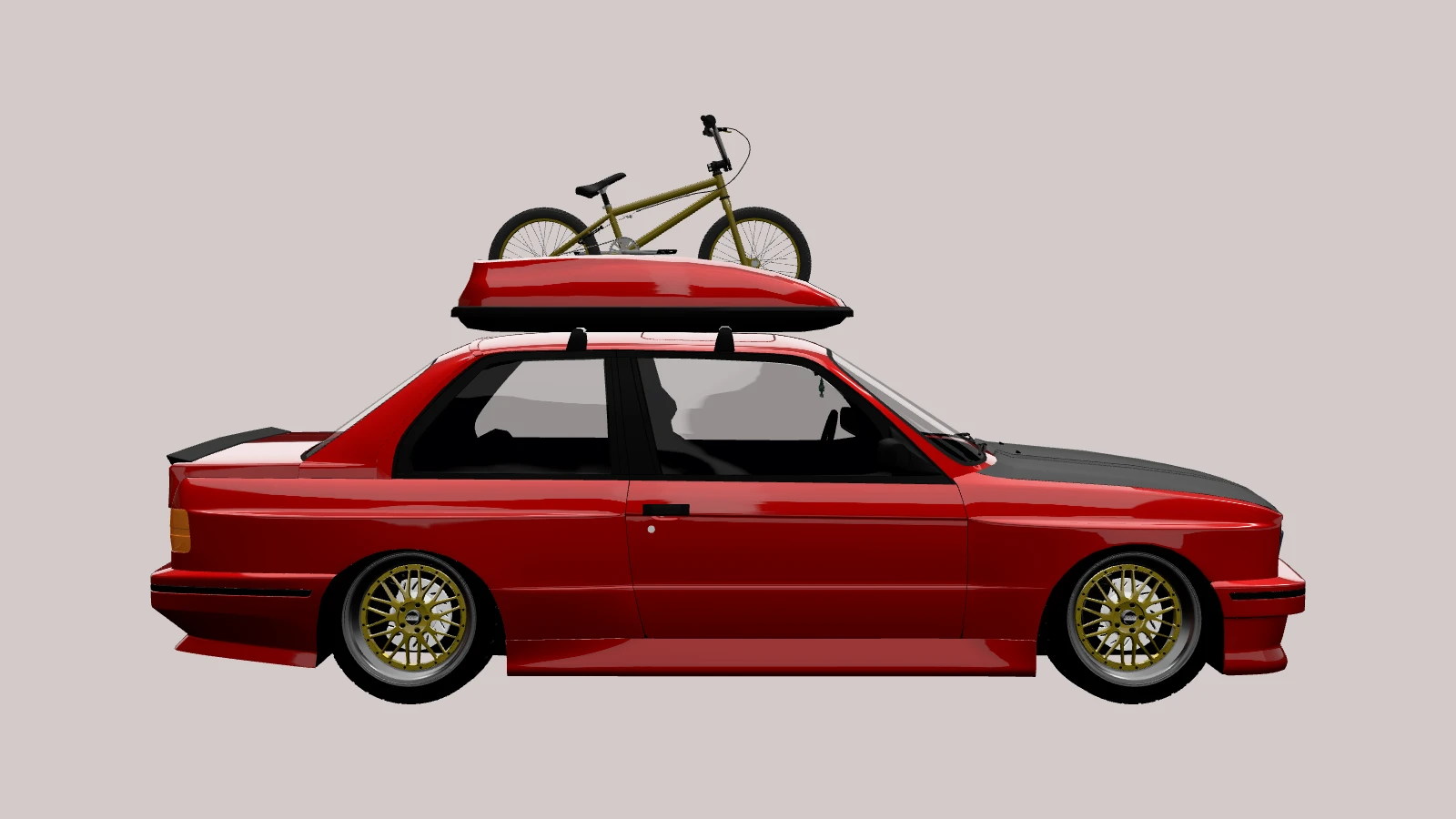
The M3 E30 shares almost no body panels with a normal E30 3 Series. BMW widened the wheel arches into the famous box shape, raised the boot lid and changed the angle of the rear window to improve the airflow, and added a rear spoiler and deeper bumpers. Only the bonnet, roof and a few parts were shared with the normal coupé.
The Mercedes kept the shape of the normal 190 saloon but received a body kit: deeper front and rear bumpers, side skirts, a rear spoiler and wider wheels. It looks more discreet, which many owners liked.
The Evolution versions of both cars became more extreme. The M3 Sport Evolution has an adjustable front splitter and rear wing, while the Mercedes 190E Evolution II has a very large rear wing and wide wheel arch extensions that made it one of the most dramatic cars of its time.
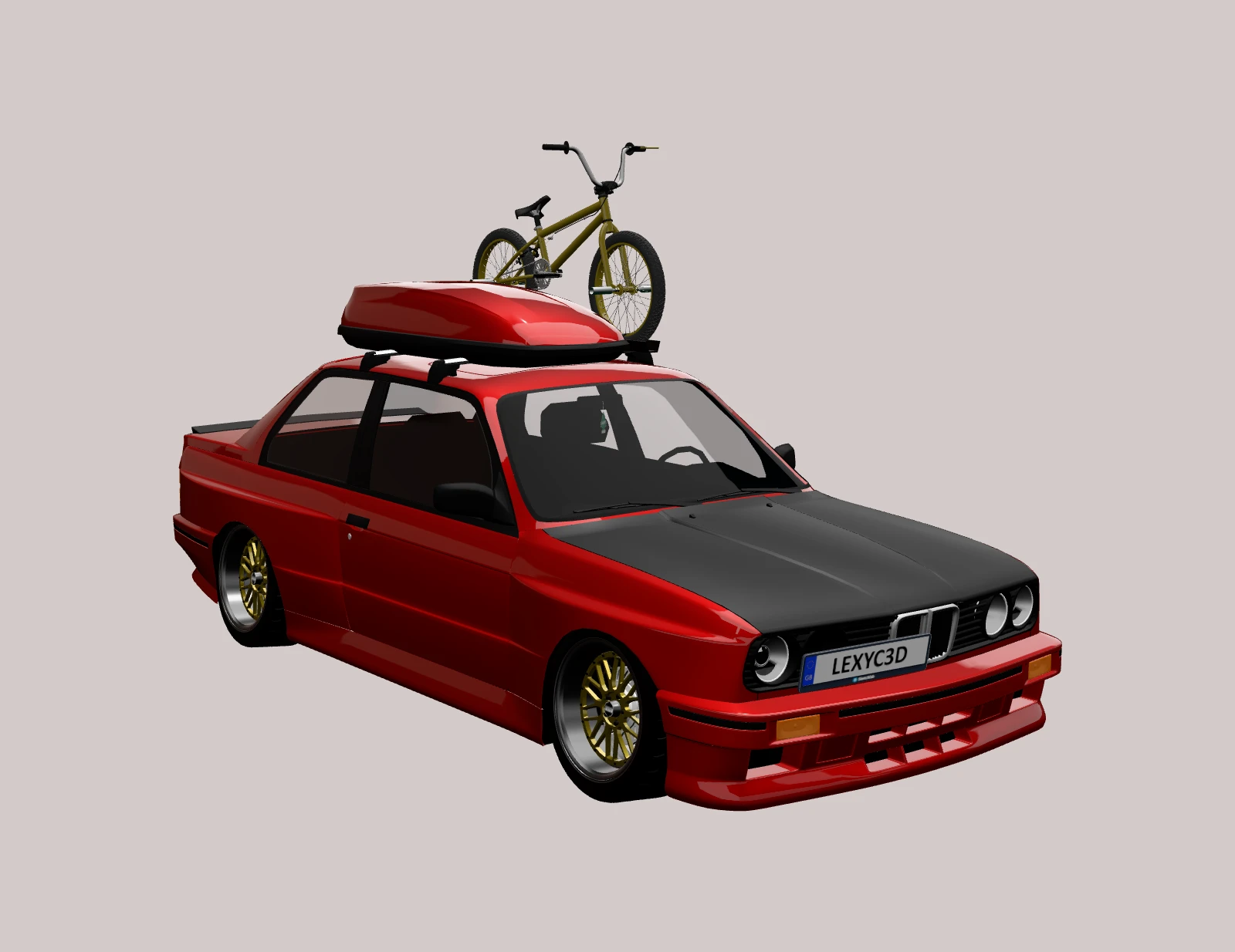
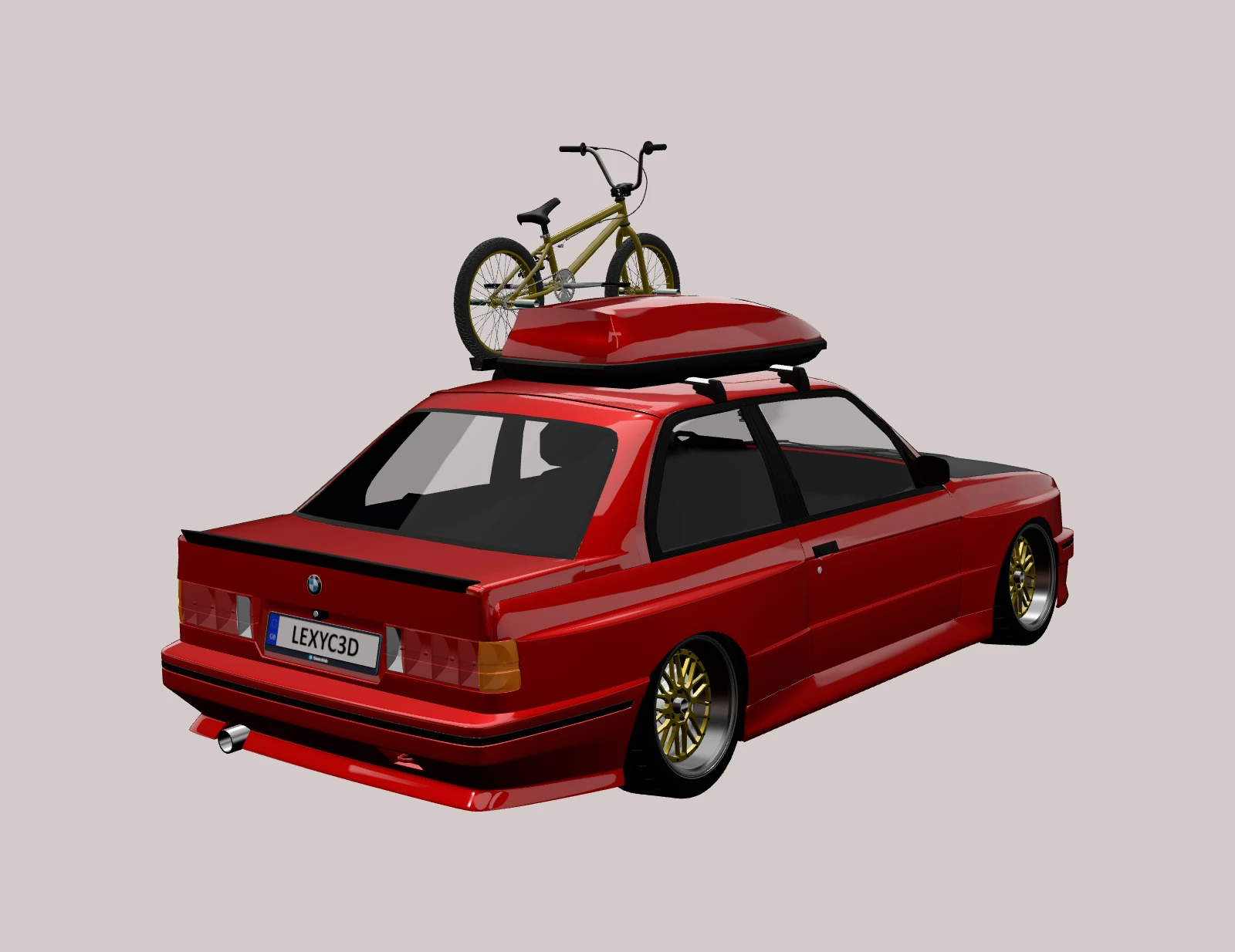
Visitors to this page can explore the M3 Coupé in 3D and change the paint, wheels and lights in Configure to see how the shape changes with different colours.
The evolution war
Racing rules allowed improved versions of a car once enough road cars had been built. This started an arms race:
- 1987–1988: BMW presented the first M3 Evolution models; the 1988 version had about 220 PS, lighter parts and small aerodynamic changes.
- 1988–1989: Mercedes introduced the 2.5-litre 190E 2.5-16, followed by the 190E 2.5-16 Evolution in 1989.
- 1990: BMW answered with the M3 Sport Evolution, with a 2.5-litre S14 and 238 PS, built in a limited series of about 600 cars.
- 1990: Mercedes presented the 190E 2.5-16 Evolution II with about 235 PS and a huge rear wing, also in a limited series of about 500 cars.
These limited models are the most valuable versions today. They were built for homologation, and many were bought by collectors from the start.
When looking at an Evolution model of either brand, check its documents and identification carefully, because copies exist. Our article on how to read a BMW VIN explains where to find the information for a BMW.
Rivals on the track
The real battle took place in the German touring car championship, the DTM, and in European touring car racing. The M3 became one of the most successful touring cars ever. It won the DTM drivers' title in 1987 and 1989, as well as many other championships across Europe and the world.
Mercedes won the DTM with the 190E Evolution II in 1992, when the rules allowed more modified cars. Races between the two brands were famous for close fights and bumper-to-bumper action in front of large crowds.
The racing success helped both road cars become icons. Many fans first saw the M3 and the 190E on television or at the circuit and later bought the road version.
Our article on BMW in the DTM tells the story of BMW in the championship, from the E30 M3 to the modern M4 GT3. Both brands still sell historic racing versions of these cars in classic racing today, where the rivalry continues.
Which one to choose today
Both cars are now sought-after classics, and good examples are expensive. The M3 is usually more valuable than a comparable 190E 2.3-16, and the limited Evolution models of both brands are the most expensive.
The most important rule is the same for both: buy the best car you can find, not the cheapest. Rust, accident damage, missing documents and incorrect parts are far more expensive to fix than to avoid. Originality matters a lot for value, so check that the engine, gearbox and body parts are correct.
Running costs depend on condition. The S14 and the Mercedes 16-valve engine need specialist care, and some model-specific parts are expensive or hard to find. Join an owners' club and use a specialist who knows these cars.
If you choose the BMW, our E30 M3 buying guide explains the main checks in detail. In the end, the choice is about character: the M3 for a raw, light driving experience, the 190E for a refined, fast classic. Both are part of one of the greatest rivalries in car history.
BMW M3 Coupé E30 specifications
| Specification | Value |
|---|---|
| Model | BMW M3 (E30) Coupé |
| Production | 1986–1991; convertible from 1988 |
| Purpose | Homologation for Group A touring car racing |
| Engine | S14 2.3-litre four-cylinder, 16 valves |
| Power | 200 PS (147 kW) without catalyst; 195 PS with catalyst |
| Torque | 240 Nm at 4,750 rpm |
| Gearbox | 5-speed Getrag manual with dogleg first gear |
| Drive | Rear-wheel drive, limited-slip differential |
| 0–100 km/h | About 6.7 s |
| Top speed | About 235 km/h |
| Weight | About 1,200 kg |
| Evolution models | Evolution (1988: about 220 PS); Sport Evolution (1990): 2.5 litres, 238 PS |
| Main rival | Mercedes 190E 2.3-16 (1983), 185 PS |
Frequently asked questions
Which is faster, the BMW M3 E30 or the Mercedes 190E 2.3-16?
The first M3 had 200 PS and about 1,200 kg, the first 190E 2.3-16 had 185 PS and was heavier, so the M3 was a little quicker. Later Evolution models of both cars were faster still.
Why were the M3 E30 and the 190E built?
Both were homologation cars: Group A racing rules required a minimum number of road cars before a model could race. BMW and Mercedes built them to compete in touring car championships such as the DTM.
Did Cosworth build the Mercedes 190E engine?
Cosworth developed the 16-valve cylinder head for the Mercedes 2.3-litre engine. The engine block came from Mercedes, so the car is often called the "190E Cosworth".
Which won more races?
The M3 E30 is one of the most successful touring cars ever, with DTM titles in 1987 and 1989 and many other championships. Mercedes won the DTM with the 190E Evolution II in 1992.
Do both cars have a dogleg gearbox?
Yes. Both used a five-speed Getrag gearbox with first gear down and to the left, a layout taken from racing.
Is the 3D car on this site an official model?
No. The 3D car is a creative model for this site and not an official BMW file, so details may differ from the real car. This site is not connected with BMW or Mercedes-Benz; the brand names are used only to describe the cars.
Sources
- BMW Group Classic – BMW M3 (E30) model history
- BMW Group PressClub – M3 history press material
- Mercedes-Benz Classic – 190 E 2.3-16 and Evolution models
- BMW M3 (E30) owner's handbook and technical data
Comments 0
Join the conversation — be kind, no links.
Loading comments…